TODD HEBERT “Three Snowmen, Three Bubbles” – An Exclusive Online ARTSY Exhibition Opening May 14th

2_Head with Trees and Ocean, 2018 Acrylic on linen over panel 10 x 11

TODD HEBERT “Three Snowmen, Three Bubbles” – An Exclusive Online ARTSY Exhibition Opening May 14th

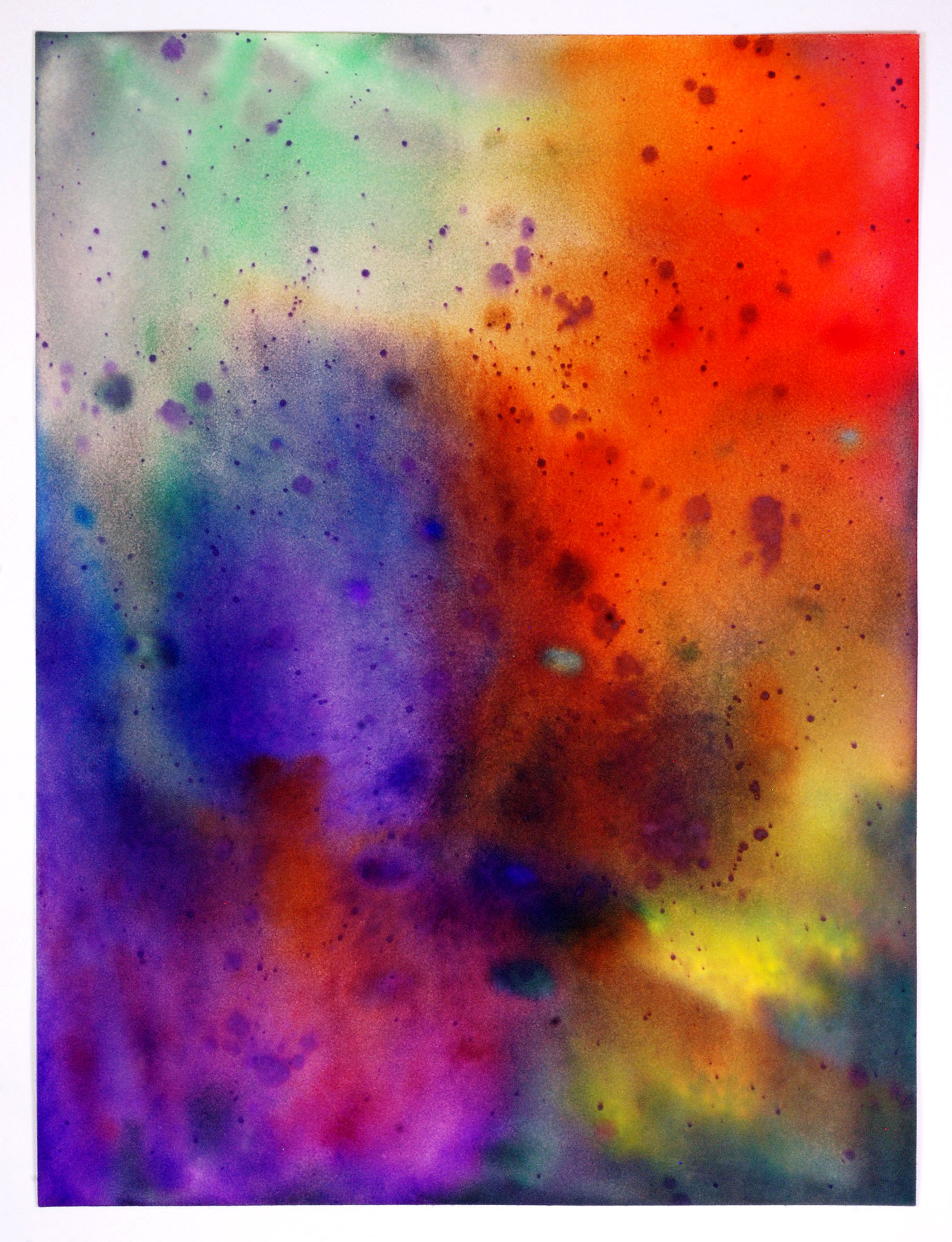
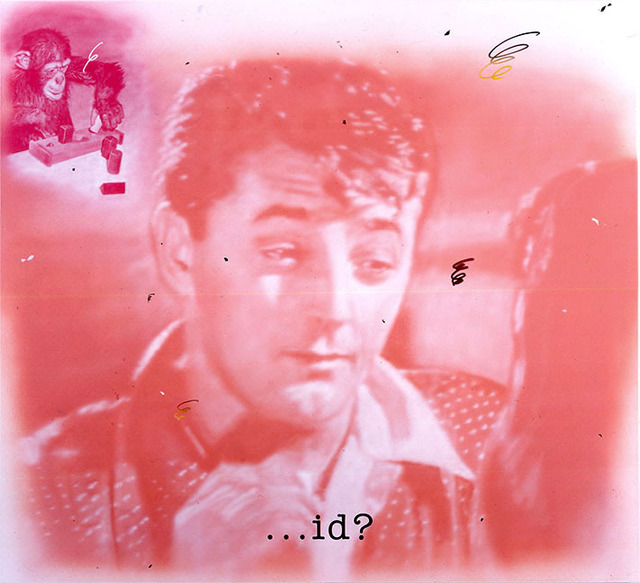
The Mark Moore Fine Art is proud to present Todd Hebert in his first online exclusive solo exhibition. North Dakota-based artist Todd Hebert employs the atmospheric and saturated visual language associated with airbrushed graphics in his paintings. This technique heightens the uncanny humanlike engagement with vernacular activities like playing football or building snowmen. 

Hebert’s work is an American lexicon: scarecrows, picnic coolers, snowmen, ceramic owls, and satellite dishes.  The images are mysteriously odd – a kind of suburban symbolism meets the allegories of the seasons (and it is definitely not Hallmark in sensibility). The artist plays off the grandeur of nature with absurd juxtapositions – picnic tables at the foot of an immense ice flow. For Hebert, the cycle of nature is really the cycle of seasonal artifacts and holiday dramas. His paintings are peculiar, minimal narratives on the passing of time.

VIEW THIS WORK NOW AT: https://www.artsy.net/mark-moore-gallery/shows

4_Bubble with Iceberg, 2018 Acrylic on linen 9 x 12

Todd Hebert received his BFA from the University of North Dakota and his MFA from the Rhode Island School of Design. He has been a fellow at the Provincetown Fine Arts Work Center, Provincetown, MA; and the Core Residency Program at the Glassell School of Art, Museum of Fine Arts, Houston, TX. Among the numerous private and public collections that have acquired his work are the Los Angeles County Museum of Art; the Neuberger Berman Collection, New York; the Museum of Contemporary Art, San Diego; and the Frederick R. Weisman Art Foundation, Los Angeles. He has exhibited his work nationally and internationally and has an upcoming exhibition with Devin Borden Gallery, Houston in 2020.

For additional information, please contact: info@markmoorefineart.com

#laart #laartist #losangelesart #losangelesartist #losangelesartists #abstractart #modernart #contemporaryart #dailyart #instaart #artcollectors #artcollector #artcritic #collector #modernartist #contemporaryartist #abstractartist #artcollective #arte #kunst

Featured Show of the Week: David Klamen: Landscapes – An Exclusive ARTSY Online Exhibition

Klamen_inverted landscape on paper 2019 copy

David Klamen: Landscapes 

An Exclusive ARTSY Online Exhibition Opening Thursday

View these works now at: https://bit.ly/3chbFEc

Mark Moore Fine Art is pleased to present an exclusive ARTSY online exhibition of five new landscape works by acclaimed artist DAVID KLAMEN. These new works on paper continues Klamen’s exploration of work centered on his interest in philosophy and scholarship.

In contrast to the tradition of artists creating works informed by a consistent visual language, David Klamen embraces an aesthetic diversity that is directed instead by an exploration of an expanding idea. In recent years, the scale of his work has shifted from tiny to larger than life, the imagery from pictorial to digital abstraction, and the tone from the silent to the aggressive, yet in each there is a common commitment. All of these works use various visual images and processes in order to investigate the question of how we know our culture and ourselves. His current paintings test epistemological strategies as diverse as OP Art (and its implication that knowledge may be a purely retinal experience), empiricism (the idea that the sole source of knowledge is direct quantifiable experience), introspection, memory, and others. In this investigation, Klamen plays with the history of art, utilizing modern and pre-modern conventions as metaphors for our communal search for meaning.

Klamen_2019 oil on paper landscape copy

In this recent body of landscape-based work, Klamen examines the veracity of his memories, creating images based upon the distant recollections of his surrounding childhood environment. These quiet, humid, existential spaces share a familiarity that emerges from the accumulated embodied experiences of his past. Each work celebrates and solidifies a fleeting facet of his prior experience. In one painting, Klamen overlaps the image with an investigation into an eastern method for acquiring wisdom. In Nichiren Buddhism there is a belief that enlightenment can be reached through repetitive chanting, referred to as “daimoku.” In this work, and a number of earlier paintings, Klamen paints a small dab of white paint as a physical record of a chanted Buddhist prayer, recording his repetitive act of chanting while painting to seek enlightenment. Each white dot engages him in an exercise of focused contemplation until a familiar image from his memory becomes activated with a unified surface of dots that create their own structured patterns. The resulting work overlaps the painted memory of an absent external landscape with a physical record of his internal meditative search for wisdom and affirmation of the present moment.

In other works, Klamen incorporates geometric tubes or patterns that float atop his highly refined landscapes. These contrast the sensuous memory of his embodied experience in the landscape with a present and vivid abstract element, overlapping two seemingly incompatible planes of cognition.The results are meditative and quiet, engaging the audience with deep tonal values and extreme control.  They ask the viewer to look more than once into the complexity of each work and encourage a shared comparison of our past memories with the present moment.

Klamen landscape detail

Detail Image

Klamen earned his Bachelor’s of Fine Arts at the University of Illinois, Champaign/Urbana, and his Master’s of Fine Arts in Painting at the School of the Art Institute in Chicago. Klamen’s work has been exhibited in international-level solo and group exhibitions across the US, Europe and Asia. His works are in the permanent collections of numerous museums including: the Metropolitan Museum of Art, New York; the Los Angeles Museum of Contemporary Art, Los Angeles; the Museum of Contemporary Art, Chicago; the Whitney Museum of American Art, New York; the San Francisco Museum of Modern Art, San Francisco; the Elvehjem Museum of Art in Madison, Wisconsin; The Berkeley Museum of Art in California; The Illinois State Museum, Springfield; the National Museum of Contemporary Art, Seoul, Korea; and the McNay Museum, San Antonio.

For additional information, please visit our website or contact us at: info@markmoorefineart.com

http://www.markmoorefineart.com

#artist #art #modernart #contemporaryart #dailyart #instaart #instagood #contemporaryartist #kunst #artcollectors #artcollector #artconsultant #abstractartist #painting #markmoorefineart #davidklamen #landscapes

Don’t Miss RARE EARTH – A Survey of Contemporary Ceramics at MMFA

IMG_0721

From raw textures and meticulous details to glazes bursting with color, the works on view in the new exhibition RARE EARTH: A SURVEY OF CONTEMPORARY CERAMICS at Mark Moore Fine Art provide fascinating insight into the experimental nature of the medium and the diversity that will shape its future. This exhibition features important works by talents like Jeffry Mitchell, Zemer Peled, Meghan Smythe, and Dirk Staschke.

Although the artists pursue a great variety of approaches and techniques, each embraces the experimental and playful sensibility this versatile medium engenders. Spanning two decades of studio practice, this exhibition celebrates the ground-breaking achievements of those artists who today continue to reimagine the possibilities of working in clay.

As an important patron of this gallery, I wanted to offer you the first look at this exclusive online ARTSY exhiibition opening this Thursday. Please follow the link below to preview this fascinating look at some of the of the most influencial figures in the medium today.

VIEW THIS EXHIBITION NOW AT: http://bit.ly/2U5ks4N

large-11

JEFFRY MITCHELL’S primary medium is ceramic and he is well versed in its traditions around the globe (references to Early American glazes, Pennsylvania Dutch pickle jars, asymmetrical Japanese aesthetic decisions and Chinese Foo Dogs abound). Mitchell takes a very direct approach to working, often eschewing refinements that commonly accompany many ceramic processes. The resulting pieces radiate an exuberant, unbridled immediacy. He feels that this unfettered approach is essentially relatable to our shared human experience. To explain this idea Mitchell talks about a fundamental familiarity with clay that we all carry with us from our formative years. Perhaps we came to it through playing as children making mud pies or maybe it was making pinch pots in elementary school, regardless he feels that clay is a material that is universally relatable at a very basic level. The imagery that he uses is also very accessible. Bears, elefants (he prefers ‘f’ to ‘ph’), bunnies and flowers appear over and over in his work and though they can be definitely be related to his own personal story he feels that these too spring from an early and universally familiar place. Throughout the work Mitchell seeks to tap into and broadcast a sense of vitality whether it be joyful or colored with more a complex mix of emotions. This through line can been seen in the thick, dripping glazes, the unabashed appropriation of decorative motifs and an unmistakable suffusion of playfulness.

Notable solo exhibitions of Mitchell’s work include: Like a Valentine: The Art of Jeffry Mitchell, 2012-2013, Henry Art Gallery; Some Things and Their Shadows, 2009, Kittredge Gallery, University of Puget Sound, Tacoma, WA; Shiny Happy Pretty (with Tina Hoggatt), 2008, Missoula Art Museum; Hanabuki, 2001, Henry Art Gallery; My Spirit, 1992, New Museum of Contemporary Art, NY; and Documents Northwest: The Poncho Series, 1990, Seattle Art Museum.

Mitchell’s work can be found in numerous private and public collections including the Smithsonian American Art Museum, Seattle Art Museum, Philadelphia Art Museum, Museum of Fine Arts, Boston, Philadelphia Art Museum, Fogg Art Museum (Harvard University), Honolulu Museum of Art, Tacoma Art Museum, and the Portland Art Museum.

large-10

ZEMER PELED’S work examines the beauty and brutality of the natural world. Her sculptural language is formed by her surrounding environment and landscapes, and engages with themes of memories, identity, and place. The association of porcelain with grace, refinement, and civilization is turned on itself when we are confronted with this material in another state. When a porcelain form is broken down into shards, the brutality of its jagged edges is juxtaposed with its insistent fragility. The material becomes both violent and beautiful, hard yet breakable. When seen in the organic formations of Peled’s structures, a whole from the shards is recreated, this time estranged from its original context of neatness, tradition, and cultivation, but nonetheless unified by an overall cohesiveness of movement and composition.

Her sculptures and installations consist of thousands of hand-crafted porcelain shards: a technique that yields a texture both delicate and severe. In some works, large-scale ceramic pieces appear airy, delicate, and fluffy, as if one’s breath might break it. In others, Peled’s fragments are geometric barbs that mysteriously take on an alluring form: offering a sense of softness despite a sharp actuality.

Peled was born and raised in Israel. She earned her MA at the Royal College  of Art (UK). In recent years, her work has been exhibited internationally at venues including Sotheby & and Saatchi Gallery (London), Nelson Atkins Museum of Art (Kansas City) among others. She has been features in Vogue, O Magazine, Elle and other international publications. 

Her work is found in many private collections around the world and Museum Collections such as Fuller Craft Museum, The Crocker Art Museum and Frederick R Weisman Art Foundation Museum. The artist lives and works in the United States.

large-12

Using a traditional sculptural format (the monument), MEGHAN SMYTHE captures contradicting extremes within human gesture: intimacy and brutality, beauty and ugliness, or the lewd and tender. In her attempt to achieve an “elegant vulgarity,” she encapsulates moments that define our mortality in unanticipated ways; oftentimes toeing the delicate line between erotic and macabre tendencies that give way to life, and ultimately death. Glass, ceramic, and concrete are woven together in an elaborate, orgy-like web of body parts and organic artifacts, as if suddenly cast with Pompeii-like circumstances. Like excavated antiquities or fossils, Smythe’s ceramic compositions allude to the cyclical nature of civilization – a dramedy in which all of the players are subject to conquest and demise.

Smythe (b. 1984, Kingston, ON) received her MFA from the Alfred University School of Art and Design (NY). Her work has been shown at the Arizona State University Art Museum (AZ) and the Gardiner Museum, Toronto (ON). She was the Visiting Artist in Residence at California State University, Long Beach (CA) from 2012-2014, where she continues to teach Ceramic Arts. The artist lives and works in Long Beach, CA.

large-14

DIRK STASCHKE is best known for his exploration of Dutch Vanitas still life themes in the medium of ceramics. His current body of work explores the space in between sculpture and painting. His work often uses meticulous representation as foil for examining skill and craft. 


He received his BFA from the University of Montevallo followed by an MFA from Alfred University and has maintained an ongoing studio practice and extensive exhibition record for the last twenty years. During this time, he has taught at many notable universities, including Alfred University and New York University. His work has been shown internationally and resides in the permanent collections of several museums including the Smithsonian Museum in Washington (DC), Icheon Museum, World Ceramic Center (Gwango-dong) South Korea, Portland Art Museum (OR). He has received various artist’s grants including grants from The Virginia Groot Foundation and the Canada Council on the Arts.

For more information on these artists or additional press materials, please visit http://www.markmoorefineart.com, or contact us at: info@markmoorefineart.com

#markmoorefineart #rebeccamanson #jeffrymitchell #zemerpeled #meghansmythe #dirkstaschke #rareearth #ceramics

Must See: Matt Pizzano’s “The Grass Is Always Greener On TV” which charts the life of Mark Bennett

large-19

Image: Mark Bennett, The Pritchett Family Plans (Modern Family), 2017 / Lithograph on Rives BFK paper / 29 × 40 in / Edition of 20 + 2AP

Capturing what feels like a lifetime in only 15-minutes, Matt Pizzano’s The Grass Is Always Greener On TV charts the life of Mark Bennett, who became famous for blueprinting every detail of the homes in the 1950s television shows he religiously watched as a child. An incredibly moving artist profile doc, the film’s glossy production and rich narrative arc echo much of the charm of the classic Hollywood that Bennett himself adored. In exploring one man’s attempt to escape into a fantasy world, Pizzano beautifully encapsulates the essence of an artist who must overcome his demons.

VIEW THIS FILM AT THE FOLLOWING LINK: https://youtu.be/_5UGXThye7M


The Grass Is Always Greener On TV uncannily juxtaposes the dark parts of Bennett’s life with the surreally perfect lives within the television shows he obsessed over. Using a combination of home video, talk show appearances, and interview footage (along with a bit of re-staging), Pizzano, alongside producer Nic Wehmeyer, build a story that feels like it should play on one of the old television screens where Bennett found so much comfort.


Accentuating the ironic comparison, the film was shot in the classic 4:3 aspect ratio, with a musical score that sounds just like something from decades past. As various clips from I Love Lucy and Leave It To Beaver play over Bennett’s confessions of a traumatic childhood, the effects of which would continue to plague him well into adulthood, Pizzano chillingly reveals the dangers of living in fantasy.


Pizzano’s greatest challenge was finding a way to bring to life both Bennett’s internal struggle and his vivid imagination, in a way that didn’t distract from the story. Motion graphics were therefore employed to illustrate Bennett’s work, with the help of the director’s creative partner and producer of the film Nic Wehmeyer.


As Bennett’s blueprints animate over the shows he studied so meticulously, Pizzano was able to translate the artist’s thought process to the screen. Coupled with stylish editing techniques, The Grass Is Always Greener On TV transcends the traditional profile doc and strikingly depicts a journey of a man who must overcome deep trauma and abuse.


Delightfully empowering and one of the most compelling real-life character arcs we’ve seen in a documentary, The Grass Is Always Greener On TV reminds us all how important it is to accept ourselves and others, flaws and all.

For more information on Mark Bennett, please contact: info@markmoorefineart.com

#laart #laartist #losangelesart #losangelesartist #losangelesartists #abstractart #modernart #contemporaryart #dailyart #instaart #artcollectors #artcollector #artcritic #collector #modernartist #contemporaryartist #abstractartist #artcollective #arte #kunst

ARTSY Show of the Week: Joseph Rossano “Artifacts of the Feed”

IMG_20190620_065038_529

In this exclusive ARTSY online exhibition, “Artifacts of the Feed“, artist JOSEPH ROSSANO presents 23 man-made manifestations of reality that represent how the process of documentation has evolved throughout a career of observation with camera, film, and now cellphone. 

VIEW THIS SHOW NOW AT: http://bit.ly/38PIg2A

Today we view our lives through an endless feed of computer-generated images. Our modern global community records life through use of the cellphone and social media, tools provided by technology. The continuous feed of data comprises digital artifacts — excerpts of our lives, our reality — that we feed to the world. An artifact is an object or work that has been manufactured by humans; it is not something from nature, but a signal of the presence and influence of man. The term “feed” refers not only to the act of giving or receiving food, but also to a channel through which matter passes and can be accessed. “Artifacts of the Feed” presents man-made manifestations of reality that represent how the process of documentation has evolved throughout a career of observation with camera, film, and now cellphone. Analog and digital means of chronicling the world will result in two very different records of the moment of exposure or capture — one which you can hold in your hand, the other requiring a computer to view. Both are intended to record reality.

Although transiently, monochrome photography has been a part of my process since first developing a roll of film as a fourteen-year-old. To me, photography is transient because making pictures with the camera has come in and out of my daily activities: sometimes picture making is an all-consuming endeavor, while at other times many months can pass without me reaching for the camera. Yet whenever I do pick up the camera, I am guided by the works of naturalist Edward A. Samuels (1836–1908) — embodied in his book “With Fly-Rod and Camera” (1890) — and Darius Kinsey, who more than a century ago spent his life documenting the virgin forests of the Pacific Northwest and those who harvested them. The images of both photographers appear a combination of silver and charcoal, ultra-high contrast, otherworldly. Leafing through the pages of their books, I find myself transported back in time by the images. In their conscientious documentation of a natural world undergoing great change, I find also a model for my own work.

Both Samuels and Kinsey employed field cameras to make monochrome analog images. These field cameras consisted of a simple box, bellows, and lens, into which was placed a sheet of film. Then, onto the film was exposed an image composed by the photographer. Experience with light, camera, and the chemistry of the day informed what would be the appropriate exposure and development for these photographers. The quality of the negative, which was on glass plate or acetate, would dictate the quality of the final image. The negative would be placed in intimate contact with photographic paper and exposed to light. The result, a contact print ranging in size from 6″ x 7″ to 14″ x 17″ and receiving no additional manipulation, was referred to as “straight photography.”

The images comprising “Artifacts of the Feed”, however, are anything but straight photographs. While these images borrow from the aesthetic of Samuels and Kinsey, they are created using a machine that houses high-tech sensors and conducts advanced mathematical processes: the cellphone. Nevertheless, as was the case for both Samuels and Kinsey, I have spent many countless hours in the forests of the Northeast and the Northwest. I have done so with vintage cameras at my side — some identical to Kinsey’s. Conveniently, both view camera and cellphone employ composing the image on a plate of glass, the outcomes — though similar in appearance — are in reality quite different. Then, in this transfer between processes, it is the action of making the image that becomes most poignant. “Artifacts of the Feed” presents contemporary documentation with digital capturing as its core — one might even say it is “With Fly-Rod and Camera 2020”. These images, manufactured through digital technology and by their nature slaves to big data, are artifacts of man. And, just as Samuels and Kinsey fed a world of people hungry for documentation of their world, their lives, and their homes, this series continues in the same vein, feeding the desire for records that present reality.

Joseph Rossano is a multidisciplinary artist who actively collaborates with prominent scientists and conservationists to create large-scale installations that explore the impact of humankind on the natural world. His work has been featured in exhibitions throughout the Seattle area and beyond, including Museum of Glass, Tacoma, WA; Google, Palo Alto, CA; San Diego Natural History Museum, San Diego, CA; Sagamore Hill National Historic Site, home and library of President Theodore Roosevelt, Oyster Bay, NY; The Cold Spring Harbor Laboratory, responsible for nine Nobel laureates, Cold Spring Harbor, NY, among others. He is based in Arlington, WA.

All work is available subject to prior sale and prices are subject to change without notice. All taxes, tariffs, shipping and/or viewing expenses, if any, would be additional.

For additional information or hi-resolution images of these works, please contact: info@markmoorefineart.com

#markmoorefineart #josephrossano #artifactsofthefeed #markmooregallery #modernart #contemporaryart #dailyart #instaart #artcollectors #artcollector #artcritic #collector #modernartist #contemporaryartist #abstractartist #artcollective #arte #kunst

More New Works by Dennis Ekstedt Added to His Exclusive ARTSY Online Show Today

Ekstedt_Luna Park 1903 # 3, oil on canvas,, 18 x 24 inches, 2020

Mark Moore Fine Art presents an exclusive ARTSY Online Exhibition of twelve recent paintings by artist DENNIS EKSTEDT.  This show – which marks the first exhibition with MMFA and the artist’s first online show to date – is on view now featuring NEW WORKS just completed and added today through May 3, 2020.

In Ekstedt’s latest paintings he depicts human populations as web-like networks of light particles spun over the landscape. In these paintings, clusters of undulating lights populate vast and dramatic terrains that are literally electrified by human habitation. Ekstedt is interested in depicting populations in movement that represent the uncontrolled growth of human habitation on the global landscape. In some of his paintings he depicts masses of people, represented by particles of light, that are engaged in spectacle, celebration and ritual. Ekstedt has long been intrigued by how networks of lights can physically mark a landscape while at the same time ethereally transcending it, resembling a schematic plan that depicts a kind of celestial order. 

VIEW THIS EXHIBITION AT THE FOLLOWING SITE:  http://bit.ly/3buEmxI

Ekstedt_Lotus (creation myth), oil on canvas,48 x72 inches, 2020

Dennis Ekstedt is an artist who lives and works in Montreal, Canada. He received his Diploma in Fine Arts in 1986 from Emily Carr Institute of Art and Design in Vancouver B.C and his M.F.A in 1993 from Concordia University in Montreal. He was the Eastern Canada winner of the RBC Canadian Painting Competition in 2002 and his paintings are included in many international public, corporate and private collections. He has exhibited in Canada, France and the U.S. 

For additional information, please contact: info@markmoorefineart.com

#markmoorefineart #dennisekstedt #artexhibition #artshow #painting #contemporarypainting #contemporaryart #artcollector #artcurator #artconsultant #artadvisor #abstractart #abstractpainting #laartist

New Limited Edition Work by Tim Bavington Released

large

New Limited Edition Work by Tim Bavington

Underdog, 2020 / Ink on Hahnemule 308gsm paper / 24 × 48 1/2 in (61 × 123.2 cm) / Editions 1-11 of 11 + 2AP

For more information, go to: https://bit.ly/2wX9HKi

Tim Bavington (b. 1966, England) received his BFA from the Art Center (CA) before making the permanent move to Las Vegas, where he completed his MFA at the University of Nevada, Las Vegas (NV). His work is included in the public collections of Fredrick R. Weisman Collection (CA), Crocker Art Museum (CA), Honolulu Art Museum (HI), Albright-Knox Art Gallery (NY), Creative Artists Agency (CA), Joslyn Art Museum (NE), Museum of Contemporary Art, San Diego (CA), Portland Art Museum (OR), United Talent Agency (CA), Vivendi Universal (CA), Palm Springs Art Museum (CA), Denver Art Museum (CO), The Museum of Modern Art (NY), Nora Eccles Harrison Museum of Art, Utah State University (UT) and the McNay Art Museum (TX). He has exhibited at LeeAhn Gallery (Daegu), Jack Shainman Gallery (NY), Galerie Jean-Luc & Takako Richard (Paris), Space Gallery (London), Museum of Fine Arts (MA), Laguna Art Museum (CA), Museo de Arte Contemporaneo de Buenos Aires, and the Texas Fine Arts Center (TX) among others.

#timbavington #markmoorefineart #markmooregallery #abstractart #artist #art #modernart #contemporaryart #dailyart #instaart #instagood #contemporaryartist #kunst #artcollectors #artcollector #artconsultant #abstractartist #painting

Closing Soon: Joseph Rossano “Artifacts of the Feed” – An Exclusive ARTSY Online Exhibition

IMG_20190331_122209-02

In this exclusive ARTSY online exhibition, “Artifacts of the Feed“, artist JOSEPH ROSSANO presents 23 man-made manifestations of reality that represent how the process of documentation has evolved throughout a career of observation with camera, film, and now cellphone. 

VIEW THIS SHOW NOW AT: http://bit.ly/38PIg2A

Today we view our lives through an endless feed of computer-generated images. Our modern global community records life through use of the cellphone and social media, tools provided by technology. The continuous feed of data comprises digital artifacts — excerpts of our lives, our reality — that we feed to the world. An artifact is an object or work that has been manufactured by humans; it is not something from nature, but a signal of the presence and influence of man. The term “feed” refers not only to the act of giving or receiving food, but also to a channel through which matter passes and can be accessed. “Artifacts of the Feed” presents man-made manifestations of reality that represent how the process of documentation has evolved throughout a career of observation with camera, film, and now cellphone. Analog and digital means of chronicling the world will result in two very different records of the moment of exposure or capture — one which you can hold in your hand, the other requiring a computer to view. Both are intended to record reality.

Although transiently, monochrome photography has been a part of my process since first developing a roll of film as a fourteen-year-old. To me, photography is transient because making pictures with the camera has come in and out of my daily activities: sometimes picture making is an all-consuming endeavor, while at other times many months can pass without me reaching for the camera. Yet whenever I do pick up the camera, I am guided by the works of naturalist Edward A. Samuels (1836–1908) — embodied in his book “With Fly-Rod and Camera” (1890) — and Darius Kinsey, who more than a century ago spent his life documenting the virgin forests of the Pacific Northwest and those who harvested them. The images of both photographers appear a combination of silver and charcoal, ultra-high contrast, otherworldly. Leafing through the pages of their books, I find myself transported back in time by the images. In their conscientious documentation of a natural world undergoing great change, I find also a model for my own work.

Both Samuels and Kinsey employed field cameras to make monochrome analog images. These field cameras consisted of a simple box, bellows, and lens, into which was placed a sheet of film. Then, onto the film was exposed an image composed by the photographer. Experience with light, camera, and the chemistry of the day informed what would be the appropriate exposure and development for these photographers. The quality of the negative, which was on glass plate or acetate, would dictate the quality of the final image. The negative would be placed in intimate contact with photographic paper and exposed to light. The result, a contact print ranging in size from 6″ x 7″ to 14″ x 17″ and receiving no additional manipulation, was referred to as “straight photography.”

The images comprising “Artifacts of the Feed”, however, are anything but straight photographs. While these images borrow from the aesthetic of Samuels and Kinsey, they are created using a machine that houses high-tech sensors and conducts advanced mathematical processes: the cellphone. Nevertheless, as was the case for both Samuels and Kinsey, I have spent many countless hours in the forests of the Northeast and the Northwest. I have done so with vintage cameras at my side — some identical to Kinsey’s. Conveniently, both view camera and cellphone employ composing the image on a plate of glass, the outcomes — though similar in appearance — are in reality quite different. Then, in this transfer between processes, it is the action of making the image that becomes most poignant. “Artifacts of the Feed” presents contemporary documentation with digital capturing as its core — one might even say it is “With Fly-Rod and Camera 2020”. These images, manufactured through digital technology and by their nature slaves to big data, are artifacts of man. And, just as Samuels and Kinsey fed a world of people hungry for documentation of their world, their lives, and their homes, this series continues in the same vein, feeding the desire for records that present reality.

Joseph Rossano is a multidisciplinary artist who actively collaborates with prominent scientists and conservationists to create large-scale installations that explore the impact of humankind on the natural world. His work has been featured in exhibitions throughout the Seattle area and beyond, including Museum of Glass, Tacoma, WA; Google, Palo Alto, CA; San Diego Natural History Museum, San Diego, CA; Sagamore Hill National Historic Site, home and library of President Theodore Roosevelt, Oyster Bay, NY; The Cold Spring Harbor Laboratory, responsible for nine Nobel laureates, Cold Spring Harbor, NY, among others. He is based in Arlington, WA.

All work is available subject to prior sale and prices are subject to change without notice. All taxes, tariffs, shipping and/or viewing expenses, if any, would be additional.

For additional information or hi-resolution images of these works, please contact: info@markmoorefineart.com

#markmoorefineart #josephrossano #artifactsofthefeed #markmooregallery #modernart #contemporaryart #dailyart #instaart #artcollectors #artcollector #artcritic #collector #modernartist #contemporaryartist #abstractartist #artcollective #arte #kunst

More New Works by Dennis Ekstedt Added to His Exclusive ARTSY Online Show Today

Ekstedt_Dreamland (Coney island, 1911), oil on canvas,, 26 x 56, inches, 2020

Mark Moore Fine Art presents an exclusive ARTSY Online Exhibition of twelve recent paintings by artist DENNIS EKSTEDT.  This show – which marks the first exhibition with MMFA and the artist’s first online show to date – is on view now featuring NEW WORKS just completed and added today through May 3, 2020.

In Ekstedt’s latest paintings he depicts human populations as web-like networks of light particles spun over the landscape. In these paintings, clusters of undulating lights populate vast and dramatic terrains that are literally electrified by human habitation. Ekstedt is interested in depicting populations in movement that represent the uncontrolled growth of human habitation on the global landscape. In some of his paintings he depicts masses of people, represented by particles of light, that are engaged in spectacle, celebration and ritual. Ekstedt has long been intrigued by how networks of lights can physically mark a landscape while at the same time ethereally transcending it, resembling a schematic plan that depicts a kind of celestial order. 

VIEW THIS EXHIBITION AT THE FOLLOWING SITE:  http://bit.ly/3buEmxI

Ekstedt_LODESTAR # 4, oil on canvas, 20 x 24 inches,, 2014

Dennis Ekstedt is an artist who lives and works in Montreal, Canada. He received his Diploma in Fine Arts in 1986 from Emily Carr Institute of Art and Design in Vancouver B.C and his M.F.A in 1993 from Concordia University in Montreal. He was the Eastern Canada winner of the RBC Canadian Painting Competition in 2002 and his paintings are included in many international public, corporate and private collections. He has exhibited in Canada, France and the U.S. 

For additional information, please contact: info@markmoorefineart.com

#markmoorefineart #dennisekstedt #artexhibition #artshow #painting #contemporarypainting #contemporaryart #artcollector #artcurator #artconsultant #artadvisor #abstractart #abstractpainting #laartist

David Klamen: Landscapes – An Exclusive ARTSY Online Exhibition Opening Tomorrow!

Klamen_Drawing 3 2018 copy

David Klamen: Landscapes 

An Exclusive ARTSY Online Exhibition Opening Thursday

View these works now at: https://bit.ly/3chbFEc

Mark Moore Fine Art is pleased to present an exclusive ARTSY online exhibition of five new landscape works by acclaimed artist DAVID KLAMEN. These new works on paper continues Klamen’s exploration of work centered on his interest in philosophy and scholarship.

In contrast to the tradition of artists creating works informed by a consistent visual language, David Klamen embraces an aesthetic diversity that is directed instead by an exploration of an expanding idea. In recent years, the scale of his work has shifted from tiny to larger than life, the imagery from pictorial to digital abstraction, and the tone from the silent to the aggressive, yet in each there is a common commitment. All of these works use various visual images and processes in order to investigate the question of how we know our culture and ourselves. His current paintings test epistemological strategies as diverse as OP Art (and its implication that knowledge may be a purely retinal experience), empiricism (the idea that the sole source of knowledge is direct quantifiable experience), introspection, memory, and others. In this investigation, Klamen plays with the history of art, utilizing modern and pre-modern conventions as metaphors for our communal search for meaning.

Klamen_Drawing 8 2018 copy

In this recent body of landscape-based work, Klamen examines the veracity of his memories, creating images based upon the distant recollections of his surrounding childhood environment. These quiet, humid, existential spaces share a familiarity that emerges from the accumulated embodied experiences of his past. Each work celebrates and solidifies a fleeting facet of his prior experience. In one painting, Klamen overlaps the image with an investigation into an eastern method for acquiring wisdom. In Nichiren Buddhism there is a belief that enlightenment can be reached through repetitive chanting, referred to as “daimoku.” In this work, and a number of earlier paintings, Klamen paints a small dab of white paint as a physical record of a chanted Buddhist prayer, recording his repetitive act of chanting while painting to seek enlightenment. Each white dot engages him in an exercise of focused contemplation until a familiar image from his memory becomes activated with a unified surface of dots that create their own structured patterns. The resulting work overlaps the painted memory of an absent external landscape with a physical record of his internal meditative search for wisdom and affirmation of the present moment.

In other works, Klamen incorporates geometric tubes or patterns that float atop his highly refined landscapes. These contrast the sensuous memory of his embodied experience in the landscape with a present and vivid abstract element, overlapping two seemingly incompatible planes of cognition.The results are meditative and quiet, engaging the audience with deep tonal values and extreme control.  They ask the viewer to look more than once into the complexity of each work and encourage a shared comparison of our past memories with the present moment.

Klamen_drawing 2 2018 copy

Klamen earned his Bachelor’s of Fine Arts at the University of Illinois, Champaign/Urbana, and his Master’s of Fine Arts in Painting at the School of the Art Institute in Chicago. Klamen’s work has been exhibited in international-level solo and group exhibitions across the US, Europe and Asia. His works are in the permanent collections of numerous museums including: the Metropolitan Museum of Art, New York; the Los Angeles Museum of Contemporary Art, Los Angeles; the Museum of Contemporary Art, Chicago; the Whitney Museum of American Art, New York; the San Francisco Museum of Modern Art, San Francisco; the Elvehjem Museum of Art in Madison, Wisconsin; The Berkeley Museum of Art in California; The Illinois State Museum, Springfield; the National Museum of Contemporary Art, Seoul, Korea; and the McNay Museum, San Antonio.

For additional information, please visit our website or contact us at: info@markmoorefineart.com

http://www.markmoorefineart.com

#artist #art #modernart #contemporaryart #dailyart #instaart #instagood #contemporaryartist #kunst #artcollectors #artcollector #artconsultant #abstractartist #painting #markmoorefineart #davidklamen #landscapes