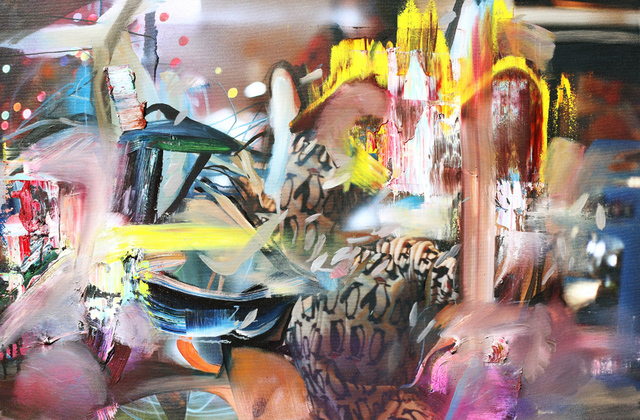
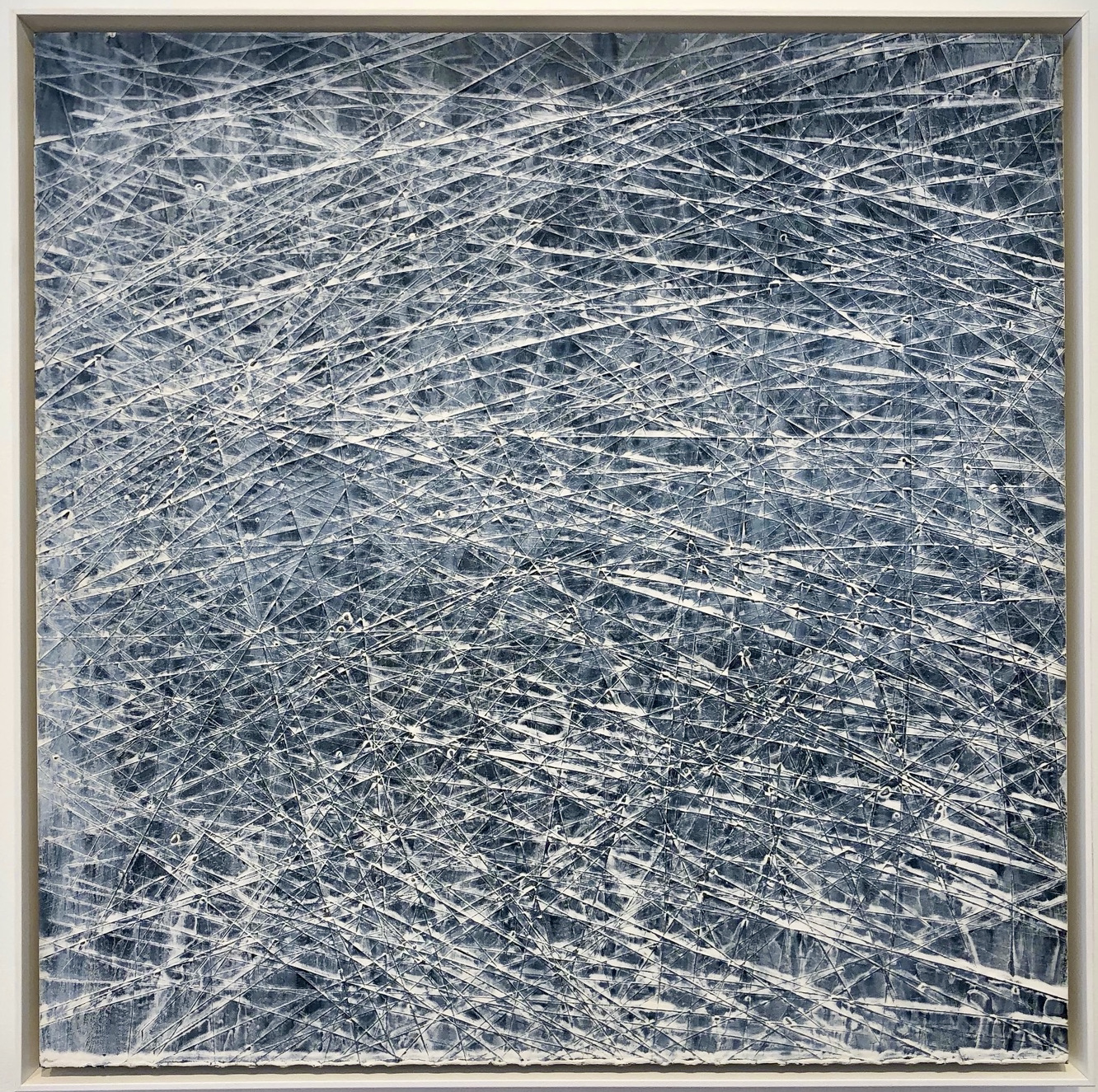
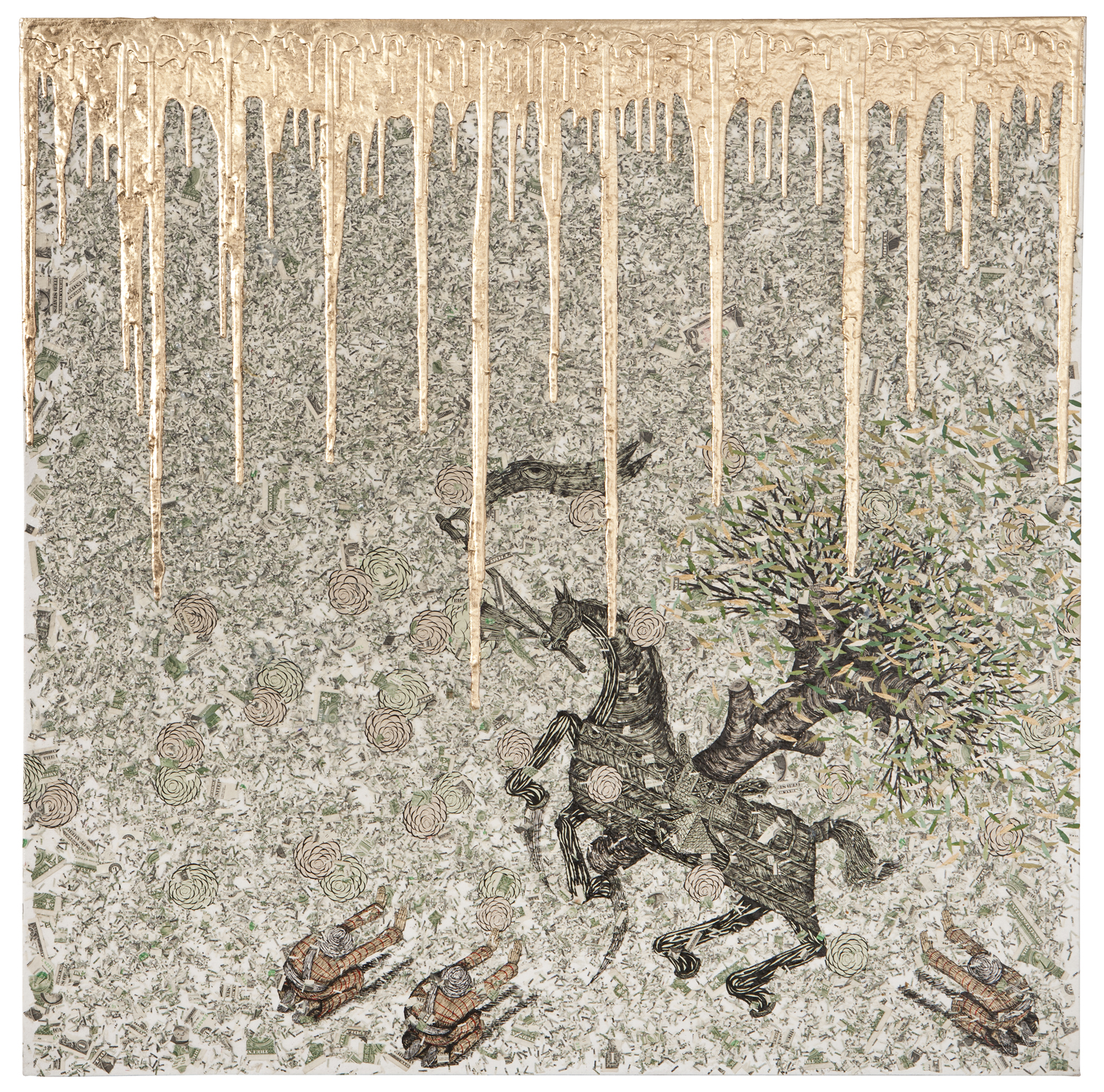
Jeanne Quinn is an American ceramic artist who works primarily with installations. In REAL AND IMAGINED we survey her work over the last two decades. View her exclusive ARTSY online exhibition with @MarkMooreGallery here now: https://bit.ly/33KFN8Q
Jeanne Quinn earned her undergraduate degree in art history from Oberlin College; she earned her MFA in ceramics from the University of Washington. She has exhibited widely, including the Museum of Contemporary Art, Denver; Robischon Gallery, Denver; Grimmerhus Museum, Denmark; Formargruppen Gallery, Malmö, Sweden; Sculpturens Hus, Stockholm, Sweden; and the Taipei County Yingge Ceramics Museum, Taipei, Taiwan. She has been a resident artist at the MacDowell Colony, the Archie Bray Foundation, the International Ceramic Center in Denmark, and the Kahla Porcelain Factory and the Ceramic Center-Berlin in Germany.
This work is featured in a Special ARTSY Viewing Room at this link: https://bit.ly/3xLzZd1
School isan international traveling exhibition, conceptualized and spearheaded by artist Joseph Rossano that casts light on the diminished state of global salmon and steelhead populations. The installation features a life-size school of mirrored salmon-like forms, sculpted from molten glass by concerned glassmakers from around the world, as well as first-hand video accounts from scientists, artists, and indigenous peoples.
Hosted by STARworks NC, glassmakers across the globe will create fish as part of the Glass Art Society’s 2021 virtual conference, May 18 -21. Participating studios and universities include Studio BLAST in Tromso Norway, Devereux & Husky in Wiltshire, UK, Benefield & Spencer Glass in Ballintoy, Northern Ireland, the Museum of Glass in Tacoma, WA, STARworks in Star, NC, Urban Glass in Brooklyn, NY, Australian National University in Canberra, and Osaka University of Art in Osaka, Japan. Each will host fish-making events.
MAY 21, 2021 Blåst / Tromsø, Norway – 7:00 a.m – 9:00 a.m. PDT Benefield – Spencer Glass, Ballintoy, Ireland – 9:00 a.m – 10:30 a.m. PDT Closing thoughts with Donna Morton of Salmon Nation and Peter Landale of the Missing Salmon Alliance – A screening of Lost at Sea – 11:00 p.m. PDT
School is inspired by the Skagit River, the fourth largest outflow to the Pacific Ocean in the continental United States, and its dwindling run of salmon and steelhead. Once numbering in the millions, the Skagit’s salmon stocks now number barely in the tens of thousands. Whereas the river’s steelhead population, which once numbered in the tens of thousands, now numbers only in the hundreds. Because steelhead return to the Skagit in the late winter when cupboards were historically bare, they once served as an essential food supply to indigenous peoples. The stories of the region’s people and their use of its land over thousands of years offer captivating and actionable insights that Rossano hopes will bring disparate groups together to benefit these fish and those dependent on them.
Joining this ambitious collaboration are, The Missing Salmon Alliance, The Wild Salmon Center, the Atlantic Salmon Trust, Salmon Nation, and the Smithsonian Institution. Together these organizations are working with Joseph Rossano to propose School as the backdrop for the United Nations Conference on Global Climate Change, COP26. The conference will take place in Glasgow, Scotland, in November of 2021.
Before School returns to its natal river, Museum of Glass, in 2022, a population of makers will strive to exceed a symbolic 2,504 fish — the estimated lowest steelhead return to the Skagit River to date — demonstrating how a group of concerned individuals can work together to foment recovery.
As School travels to different regions of the globe — regions with their own rivers and issues unique to each stock of fish that depend upon them — the narrative will change to cast light on that river and its fish populations. When in Scotland the story might focus on the River Clyde; in New York, the Connecticut; in Montreal, the Grand Cascapédia; yet, at the exhibit’s end, like the salmon and steelhead it mimics, it will return to the place of its spawning in the Pacific Northwest. With that return, School will tell the story of vanishing and endangered fish, their world, and the world of makers that grew this vision of awareness through art.
This work is featured in a Special ARTSY Viewing Room at this link: https://bit.ly/3xLzZd1
School isan international traveling exhibition, conceptualized and spearheaded by artist Joseph Rossano that casts light on the diminished state of global salmon and steelhead populations. The installation features a life-size school of mirrored salmon-like forms, sculpted from molten glass by concerned glassmakers from around the world, as well as first-hand video accounts from scientists, artists, and indigenous peoples.
Hosted by STARworks NC, glassmakers across the globe will create fish as part of the Glass Art Society’s 2021 virtual conference, May 18 -21. Participating studios and universities include Studio BLAST in Tromso Norway, Devereux & Husky in Wiltshire, UK, Benefield & Spencer Glass in Ballintoy, Northern Ireland, the Museum of Glass in Tacoma, WA, STARworks in Star, NC, Urban Glass in Brooklyn, NY, Australian National University in Canberra, and Osaka University of Art in Osaka, Japan. Each will host fish-making events.
MAY 20, 2021 GAS Conference / Virtual Livestream, From Devereux & Huskie Glassworks / Wiltshire, UK – 5:00 a.m. – 7:00 a.m. PDT Museum of Glass / Tacoma, WA – 1:00 p.m. 3:00 p.m PDT The Australian National University / Canberra, Australia – 5:00 p.m. – 6:30 p.m. PDT Osaka University of Art / Osaka, Japan – 6:30 p.m. – 8:30 p.m. PDT
School is inspired by the Skagit River, the fourth largest outflow to the Pacific Ocean in the continental United States, and its dwindling run of salmon and steelhead. Once numbering in the millions, the Skagit’s salmon stocks now number barely in the tens of thousands. Whereas the river’s steelhead population, which once numbered in the tens of thousands, now numbers only in the hundreds. Because steelhead return to the Skagit in the late winter when cupboards were historically bare, they once served as an essential food supply to indigenous peoples. The stories of the region’s people and their use of its land over thousands of years offer captivating and actionable insights that Rossano hopes will bring disparate groups together to benefit these fish and those dependent on them.
Joining this ambitious collaboration are, The Missing Salmon Alliance, The Wild Salmon Center, the Atlantic Salmon Trust, Salmon Nation, and the Smithsonian Institution. Together these organizations are working with Joseph Rossano to propose School as the backdrop for the United Nations Conference on Global Climate Change, COP26. The conference will take place in Glasgow, Scotland, in November of 2021.
Before School returns to its natal river, Museum of Glass, in 2022, a population of makers will strive to exceed a symbolic 2,504 fish — the estimated lowest steelhead return to the Skagit River to date — demonstrating how a group of concerned individuals can work together to foment recovery.
As School travels to different regions of the globe — regions with their own rivers and issues unique to each stock of fish that depend upon them — the narrative will change to cast light on that river and its fish populations. When in Scotland the story might focus on the River Clyde; in New York, the Connecticut; in Montreal, the Grand Cascapédia; yet, at the exhibit’s end, like the salmon and steelhead it mimics, it will return to the place of its spawning in the Pacific Northwest. With that return, School will tell the story of vanishing and endangered fish, their world, and the world of makers that grew this vision of awareness through art.
This work is featured in a Special ARTSY Viewing Room at this link: https://bit.ly/3xLzZd1
School isan international traveling exhibition, conceptualized and spearheaded by artist Joseph Rossano that casts light on the diminished state of global salmon and steelhead populations. The installation features a life-size school of mirrored salmon-like forms, sculpted from molten glass by concerned glassmakers from around the world, as well as first-hand video accounts from scientists, artists, and indigenous peoples.
Hosted by STARworks NC, glassmakers across the globe will create fish as part of the Glass Art Society’s 2021 virtual conference, May 18 -21. Participating studios and universities include Studio BLAST in Tromso Norway, Devereux & Husky in Wiltshire, UK, Benefield & Spencer Glass in Ballintoy, Northern Ireland, the Museum of Glass in Tacoma, WA, STARworks in Star, NC, Urban Glass in Brooklyn, NY, Australian National University in Canberra, and Osaka University of Art in Osaka, Japan. Each will host fish-making events.
School is inspired by the Skagit River, the fourth largest outflow to the Pacific Ocean in the continental United States, and its dwindling run of salmon and steelhead. Once numbering in the millions, the Skagit’s salmon stocks now number barely in the tens of thousands. Whereas the river’s steelhead population, which once numbered in the tens of thousands, now numbers only in the hundreds. Because steelhead return to the Skagit in the late winter when cupboards were historically bare, they once served as an essential food supply to indigenous peoples. The stories of the region’s people and their use of its land over thousands of years offer captivating and actionable insights that Rossano hopes will bring disparate groups together to benefit these fish and those dependent on them.
Joining this ambitious collaboration are, The Missing Salmon Alliance, The Wild Salmon Center, the Atlantic Salmon Trust, Salmon Nation, and the Smithsonian Institution. Together these organizations are working with Joseph Rossano to propose School as the backdrop for the United Nations Conference on Global Climate Change, COP26. The conference will take place in Glasgow, Scotland, in November of 2021.
Before School returns to its natal river, Museum of Glass, in 2022, a population of makers will strive to exceed a symbolic 2,504 fish — the estimated lowest steelhead return to the Skagit River to date — demonstrating how a group of concerned individuals can work together to foment recovery.
As School travels to different regions of the globe — regions with their own rivers and issues unique to each stock of fish that depend upon them — the narrative will change to cast light on that river and its fish populations. When in Scotland the story might focus on the River Clyde; in New York, the Connecticut; in Montreal, the Grand Cascapédia; yet, at the exhibit’s end, like the salmon and steelhead it mimics, it will return to the place of its spawning in the Pacific Northwest. With that return, School will tell the story of vanishing and endangered fish, their world, and the world of makers that grew this vision of awareness through art.
Daniel Canogar new work, “Bifurcation” consists in electric-like bolts of light that zigzag up and down the Zebra Building. Connected to the internet, Bifurcation reacts in real time to thunderstorms happening around the globe. The algorithm created by the artist’s studio uses real-time data from a storm- tracking webpage. Some of the data that is interpreted includes the location of the storm, if the lightning bolts are vertical or horizontal, positive or negative, and the amperes of the lightning strike. All this information is processed to create a generative animation that constantly changes and never repeats itself.
The artwork metaphorically becomes a conduit for the planet’s energy, as well as a translator of human versus natural forms of power.
Check out the new ARTSY VIEWING ROOM focused on artist Daniel Canogar’s amazing new work: https://bit.ly/3u46gZX
This work is featured in a Special ARTSY Viewing Room at this link: https://bit.ly/3xLzZd1
School isan international traveling exhibition, conceptualized and spearheaded by artist Joseph Rossano that casts light on the diminished state of global salmon and steelhead populations. The installation features a life-size school of mirrored salmon-like forms, sculpted from molten glass by concerned glassmakers from around the world, as well as first-hand video accounts from scientists, artists, and indigenous peoples.
Hosted by STARworks NC, glassmakers across the globe will create fish as part of the Glass Art Society’s 2021 virtual conference, May 18 -21. Participating studios and universities include Studio BLAST in Tromso Norway, Devereux & Husky in Wiltshire, UK, Benefield & Spencer Glass in Ballintoy, Northern Ireland, the Museum of Glass in Tacoma, WA, STARworks in Star, NC, Urban Glass in Brooklyn, NY, Australian National University in Canberra, and Osaka University of Art in Osaka, Japan. Each will host fish-making events.
MAY 18, 2021 GAS Conference 2021 – A welcome by Salmon Nation – A Screening of The Wild with Mark Titus – 10:00 a.m. & 6:00 p.m. PDT
School is inspired by the Skagit River, the fourth largest outflow to the Pacific Ocean in the continental United States, and its dwindling run of salmon and steelhead. Once numbering in the millions, the Skagit’s salmon stocks now number barely in the tens of thousands. Whereas the river’s steelhead population, which once numbered in the tens of thousands, now numbers only in the hundreds. Because steelhead return to the Skagit in the late winter when cupboards were historically bare, they once served as an essential food supply to indigenous peoples. The stories of the region’s people and their use of its land over thousands of years offer captivating and actionable insights that Rossano hopes will bring disparate groups together to benefit these fish and those dependent on them.
Joining this ambitious collaboration are, The Missing Salmon Alliance, The Wild Salmon Center, the Atlantic Salmon Trust, Salmon Nation, and the Smithsonian Institution. Together these organizations are working with Joseph Rossano to propose School as the backdrop for the United Nations Conference on Global Climate Change, COP26. The conference will take place in Glasgow, Scotland, in November of 2021.
Before School returns to its natal river, Museum of Glass, in 2022, a population of makers will strive to exceed a symbolic 2,504 fish — the estimated lowest steelhead return to the Skagit River to date — demonstrating how a group of concerned individuals can work together to foment recovery.
As School travels to different regions of the globe — regions with their own rivers and issues unique to each stock of fish that depend upon them — the narrative will change to cast light on that river and its fish populations. When in Scotland the story might focus on the River Clyde; in New York, the Connecticut; in Montreal, the Grand Cascapédia; yet, at the exhibit’s end, like the salmon and steelhead it mimics, it will return to the place of its spawning in the Pacific Northwest. With that return, School will tell the story of vanishing and endangered fish, their world, and the world of makers that grew this vision of awareness through art.
School isan international traveling exhibition, conceptualized and spearheaded by artist Joseph Rossano that casts light on the diminished state of global salmon and steelhead populations. The installation features a life-size school of mirrored salmon-like forms, sculpted from molten glass by concerned glassmakers from around the world, as well as first-hand video accounts from scientists, artists, and indigenous peoples.
This work is featured in a Special ARTSY Viewing Room at this link: https://bit.ly/3xLzZd1
School is inspired by the Skagit River, the fourth largest outflow to the Pacific Ocean in the continental United States, and its dwindling run of salmon and steelhead. Once numbering in the millions, the Skagit’s salmon stocks now number barely in the tens of thousands. Whereas the river’s steelhead population, which once numbered in the tens of thousands, now numbers only in the hundreds. Because steelhead return to the Skagit in the late winter when cupboards were historically bare, they once served as an essential food supply to indigenous peoples. The stories of the region’s people and their use of its land over thousands of years offer captivating and actionable insights that Rossano hopes will bring disparate groups together to benefit these fish and those dependent on them.
Hosted by STARworks NC, glassmakers across the globe will create fish as part of the Glass Art Society’s 2021 virtual conference, May 18 -21. Participating studios and universities include Studio BLAST in Tromso Norway, Devereux & Husky in Wiltshire, UK, Benefield & Spencer Glass in Ballintoy, Northern Ireland, the Museum of Glass in Tacoma, WA, STARworks in Star, NC, Urban Glass in Brooklyn, NY, Australian National University in Canberra, and Osaka University of Art in Osaka, Japan. Each will host fish-making events.
MAY 18, 2021 GAS Conference 2021 – A welcome by Salmon Nation – A Screening of The Wild with Mark Titus – 10:00 a.m. & 6:00 p.m. PDT
MAY 20, 2021 GAS Conference / Virtual Livestream, From Devereux & Huskie Glassworks / Wiltshire, UK – 5:00 a.m. – 7:00 a.m. PDT Museum of Glass / Tacoma, WA – 1:00 p.m. 3:00 p.m PDT The Australian National University / Canberra, Australia – 5:00 p.m. – 6:30 p.m. PDT Osaka University of Art / Osaka, Japan – 6:30 p.m. – 8:30 p.m. PDT
MAY 21, 2021 Blåst / Tromsø, Norway – 7:00 a.m – 9:00 a.m. PDT Benefield – Spencer Glass, Ballintoy, Ireland – 9:00 a.m – 10:30 a.m. PDT Closing thoughts with Donna Morton of Salmon Nation and Peter Landale of the Missing Salmon Alliance – A screening of Lost at Sea – 11:00 p.m. PDT
Joining this ambitious collaboration are, The Missing Salmon Alliance, The Wild Salmon Center, the Atlantic Salmon Trust, Salmon Nation, and the Smithsonian Institution. Together these organizations are working with Joseph Rossano to propose School as the backdrop for the United Nations Conference on Global Climate Change, COP26. The conference will take place in Glasgow, Scotland, in November of 2021.
Before School returns to its natal river, Museum of Glass, in 2022, a population of makers will strive to exceed a symbolic 2,504 fish — the estimated lowest steelhead return to the Skagit River to date — demonstrating how a group of concerned individuals can work together to foment recovery.
As School travels to different regions of the globe — regions with their own rivers and issues unique to each stock of fish that depend upon them — the narrative will change to cast light on that river and its fish populations. When in Scotland the story might focus on the River Clyde; in New York, the Connecticut; in Montreal, the Grand Cascapédia; yet, at the exhibit’s end, like the salmon and steelhead it mimics, it will return to the place of its spawning in the Pacific Northwest. With that return, School will tell the story of vanishing and endangered fish, their world, and the world of makers that grew this vision of awareness through art.
With surgical blades and a meticulous hand for nearly two decades Kim Rugg (b. 1963, Canada) dissected and reassembled newspapers, stamps, comic books, cereal boxes and postage stamps in order to render them conventionally illegible. In her early work, the front page of the LA Times becomes neatly alphabetized jargon, debunking the illusion of its producers’ authority as much as the message itself. Through her re-appropriation of medium and meaning, she effectively highlights the innately slanted nature of the distribution of information as well as its messengers. Rugg has also created hand-drawn works alongside wallpaper installations, both of which toy with authenticity and falsehood through subtle trompe l’oeil. In her maps, Rugg re-envisions the topography of various states, countries, continents, and even the world without borders, featuring a staggeringly precise hand-drawn layout with only city names and regions as reference points. In own sense of abstracted cartography, Rugg redistributes traditional map colors (or eliminates them entirely) to nullify the social preeminence given to constructed territories and highlight the idea that our attention is manipulated to focus on the powerful few instead of the physical many.
In this new series of embroidered work and woven fabric, Rugg explores contemporary social themes using a most traditional European medium, embroidery, and woven fabrics.
Moral or religious texts continued to be a frequent choice in the first half of the 19th century. These “Samplers”, first popular in England in the mid-17th century, that focused on improving or pious statements are central to the often unsophisticated pieces we now recognize as a ‘classic’ Victorian sampler. This type of piece was also important in the embroidery traditions of European settlers in America, whose strongly felt sense of religious purpose helped to sustain them in an unfamiliar and often unforgiving landscape.
As The artist put it, “These works were inspired by the tradition of embroidering or cross-stitching a favorite passage of the Bible or other religious book and displaying it on the wall. I have used this language to interpret the words of D Trump, in particular his tweets whom some people follow with an almost religious devotion.”
“The tweets are hand embroidered onto traditional, soft furnishing backgrounds using an elegant typeface. I have transposed them without editing or correction. I have included the time and date of the tweet in reference to the attribution of a scripture quote to its author. They are mounted on board with some upholstery foam and trims to give them a “Lush feel”.
Rugg received her MFA in Sculpture from the Royal College of Art (London). Her work can be seen in the permanent collections of the National Gallery of Art (D.C.) and the Frederick R. Weisman Foundation (CA), the Museum of Contemporary Art, San Diego (CA), Honolulu Museum of Art, the Norton Museum (FL), and the Museum of Fine Arts Houston (TX) among others. She has been included in exhibitions at the San Jose Institute of Contemporary Art (CA), Elizabeth Foundation for the Arts (NY), Galerie Schmidt Maczollek (Cologne), and Nettie Horn Gallery (Manchester), P.P.O.W. Gallery (NYC), and was the recipient of the Thames and Hudson Prize from the Royal College of Art Society in 2004. She lives and works in London (UK).
Artist catalogs available are: Penelope Umbrico; The Clayton Brothers; Cheryl Pope; David Klamen; Christopher Russell; Ben Weiner; Joshua Dildine; Kim Rugg; Feodor Voronov; Stephanie Washburn; John Azzarella; David Rathman; Vernon Fisher; Dimitri Kozyrev; Allison Schulnik; Ali Smith; Jeremy Fish; Kiel Johnson; Cindy Wright; Yigal Ozeri; Chad Person; Kim Dorland; and Tim Bavington.
With surgical blades and a meticulous hand for nearly two decades Kim Rugg (b. 1963, Canada) dissected and reassembled newspapers, stamps, comic books, cereal boxes and postage stamps in order to render them conventionally illegible. In her early work, the front page of the LA Times becomes neatly alphabetized jargon, debunking the illusion of its producers’ authority as much as the message itself. Through her re-appropriation of medium and meaning, she effectively highlights the innately slanted nature of the distribution of information as well as its messengers. Rugg has also created hand-drawn works alongside wallpaper installations, both of which toy with authenticity and falsehood through subtle trompe l’oeil. In her maps, Rugg re-envisions the topography of various states, countries, continents, and even the world without borders, featuring a staggeringly precise hand-drawn layout with only city names and regions as reference points. In own sense of abstracted cartography, Rugg redistributes traditional map colors (or eliminates them entirely) to nullify the social preeminence given to constructed territories and highlight the idea that our attention is manipulated to focus on the powerful few instead of the physical many.
In this new series of embroidered work and woven fabric, Rugg explores contemporary social themes using a most traditional European medium, embroidery, and woven fabrics.
Moral or religious texts continued to be a frequent choice in the first half of the 19th century. These “Samplers”, first popular in England in the mid-17th century, that focused on improving or pious statements are central to the often unsophisticated pieces we now recognize as a ‘classic’ Victorian sampler. This type of piece was also important in the embroidery traditions of European settlers in America, whose strongly felt sense of religious purpose helped to sustain them in an unfamiliar and often unforgiving landscape.
As The artist put it, “These works were inspired by the tradition of embroidering or cross-stitching a favorite passage of the Bible or other religious book and displaying it on the wall. I have used this language to interpret the words of D Trump, in particular his tweets whom some people follow with an almost religious devotion.”
“The tweets are hand embroidered onto traditional, soft furnishing backgrounds using an elegant typeface. I have transposed them without editing or correction. I have included the time and date of the tweet in reference to the attribution of a scripture quote to its author. They are mounted on board with some upholstery foam and trims to give them a “Lush feel”.
Rugg received her MFA in Sculpture from the Royal College of Art (London). Her work can be seen in the permanent collections of the National Gallery of Art (D.C.) and the Frederick R. Weisman Foundation (CA), the Museum of Contemporary Art, San Diego (CA), Honolulu Museum of Art, the Norton Museum (FL), and the Museum of Fine Arts Houston (TX) among others. She has been included in exhibitions at the San Jose Institute of Contemporary Art (CA), Elizabeth Foundation for the Arts (NY), Galerie Schmidt Maczollek (Cologne), and Nettie Horn Gallery (Manchester), P.P.O.W. Gallery (NYC), and was the recipient of the Thames and Hudson Prize from the Royal College of Art Society in 2004. She lives and works in London (UK).