George Stoll handcrafts items that are normally mass factory produced to create viewer-challenging installations whereby highly realistic objects are abstracted beyond their “domestic function.” Included are sponges, toilet paper, and paper towels. In creating these works, he is focused on the relationship between consumer culture and high art. View more of his work available at: https://bit.ly/3pHiY0F
Stoll’s first exhibition was in 1994 in Los Angeles, and was titled Tupperware. Stoll elevates what is usually considered disposable to art by asking viewers to take another look at those objects that surround them. He has been showing his work internationally since 1994 including one person shows at Anthony Grant in New York; Paule Anglim in San Francisco; Angles in Los Angeles; Windows in Brussels, Belgium and Gallery Seomi in Seoul, Korea among others.
In 1996 The Contemporary Art Center in Cincinnati exhibited his work in a two man show with Mark Bennett and in 2000 his work was surveyed with Clay Ketter’s at the Rose Museum at Brandeis University. George Stoll’s work is in several permanent collections including The Hammer Museum, UCLA; Museum of Contemporary Art, Los angeles and The Henry Art Gallery, University of Washington. In 2005 he became a Fellow of The American Academy in Rome.
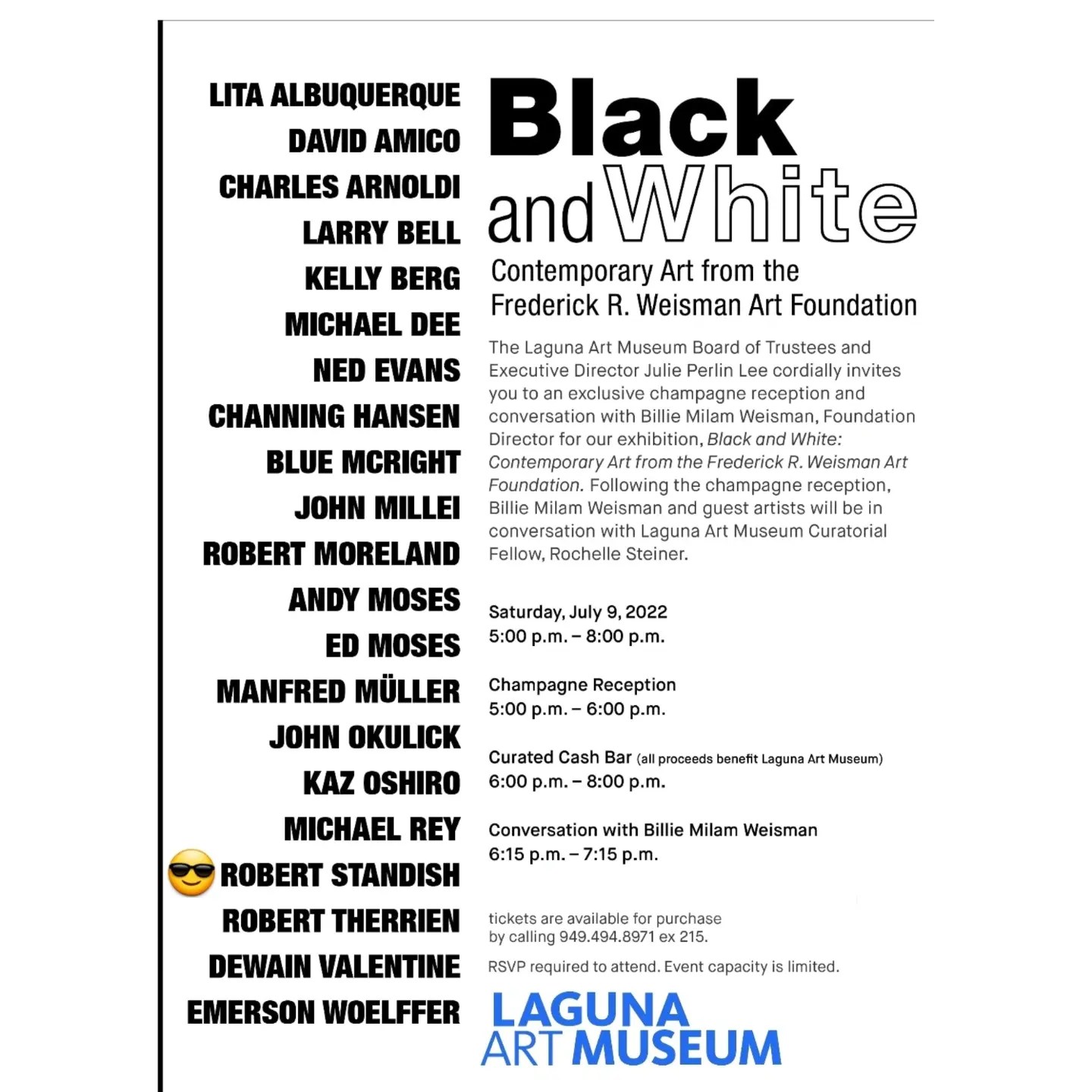
Frederick R. Weisman held an uncompromising belief in the cultural value of art. Laguna Art Museum is pleased to partner with the Frederick R. Weisman Art Foundation for this special exhibition curated by the Director of the Foundation, Billie Milam Weisman.
In carrying out Mr. Weisman’s intentions, the Foundation continues to collect and make publicly accessible significant works of modern and contemporary art as a means to contribute to the creative and intellectual life of the community. These 30 artworks are a cross-section of works by artists who share attention to black and white—as palate and, in some cases, as theme. This selection demonstrates a diverse array of the artistic approaches, materials, and techniques that Southern California-based artists have deployed over the past half century.
Robert Standish is an American painter living and working in Los Angeles whose organic process reveals the emotive effects of color, shape, and texture. Inspired by the color-field painters Abstract Expressionism, and Abstract Spritualism, Standish’s free-flowing use of paint is his way of exploring abstraction, composition and transcendence. His works can be found in the permanent collections of the Los Angeles County Museum of Art, JP MORGAN CHASE, The Weisman Foundation, the Lancaster Museum of Art and History, Nora Eccles Harrison Museum of Art, Crocker Art Museum, Louis K. Meisel, Larry and Marilyn Fields, Patricia Arquette, Norwest Venture Partners, and BRYANT/ STIBEL, along with numerous other acclaimed collections. Standish’s paintings have been exhibited internationally in galleries and museums, including group shows at the Carnegie Art Museum, Frederick R Weisman Museum of Art, a duo show with Sam Francis at Martin Lawrence Gallery, and a solo show at the Museum of Art and History, Lancaster.
VERNON FISHER: SEVEN FROM THE VAULT – An Exclusive ARTSY Online Exhibition
July 7 – September 11, 2022
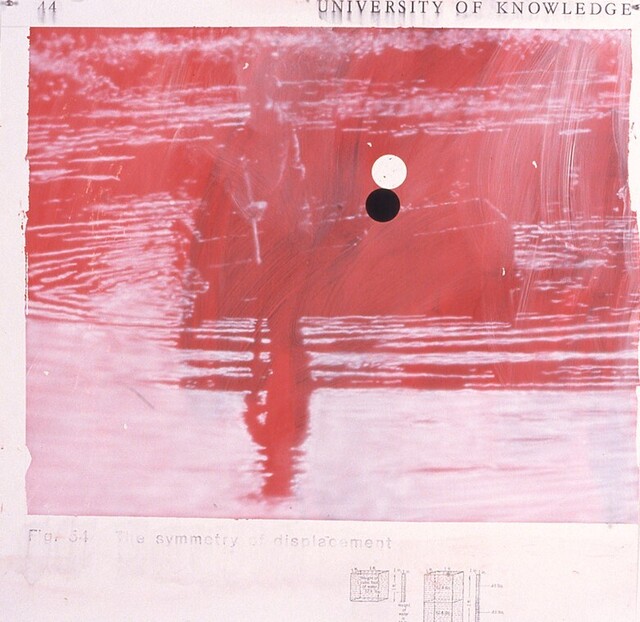
Vernon Fisher is an American artist working in a wide range of media, best known for his skillful combinations and juxtapositions of image and language. In this exclusive ARTSY online exhibition we present seven important works from the artist’s personal collection available now.
“Anything that is resolved is either delusional or dishonest. We live far more arbitrary and capricious lives than we’re ready to admit. I think if we admitted it, we’d be scared all the time. Nothing in life is ever truly neat.” – Vernon Fisher
The mid-1970s was the period when Vernon Fisher started his artistic career, in the era marked by the legacies of Pop and Conceptual art. This mixture of styles created a unique fusion between painting and installation, in that way shaping new inspiring compositions derived from juxtapositions of language and imagery. Influenced by this period in contemporary art, but also by artists such as Ed Ruscha and John Baldessari, Fisher began creating his multilayered visual narratives. Resulting works – paintings, installations and collages – represent Vernon Fisher’s view on pop culture and contemporary society, enriched with art-historical and literary references. Often contextualized within a postmodernism, his works shares an influential practice of self-appraisal with Cy Twombly and Robert Rauschenberg.
Vernon Fisher was born in 1943 in Fort Worth, Texas. He studied English literature at the Hardin-Simmons University, where he received a BA in 1967. Vernon got his MFA in 1969, from the University of Illinois. As a true Fort Worth child, Fisher was raised and is still living in his hometown, where he enjoys appreciation as one of the Texas’s most internationally recognized artists.
The art of Vernon Fisher is included in the collections of more than 40 museums across the globe, such as the Hirshhorn Museum, Washington, D.C., Art Institute of Chicago, Modern Art Museum of Fort Worth, Phoenix Art Museum, Museum of Fine Arts, Houston, San Francisco Museum of Modern Art, Solomon R. Guggenheim Museum in New York and the Museum of Contemporary Art Chicago. The most important museum installation is in the collection of the famous Museum of Modern Art in New York.
Go to this link to access the Special ARTSY Viewing Room showcasing the seven important works just released from his studio: https://bit.ly/39WSofS
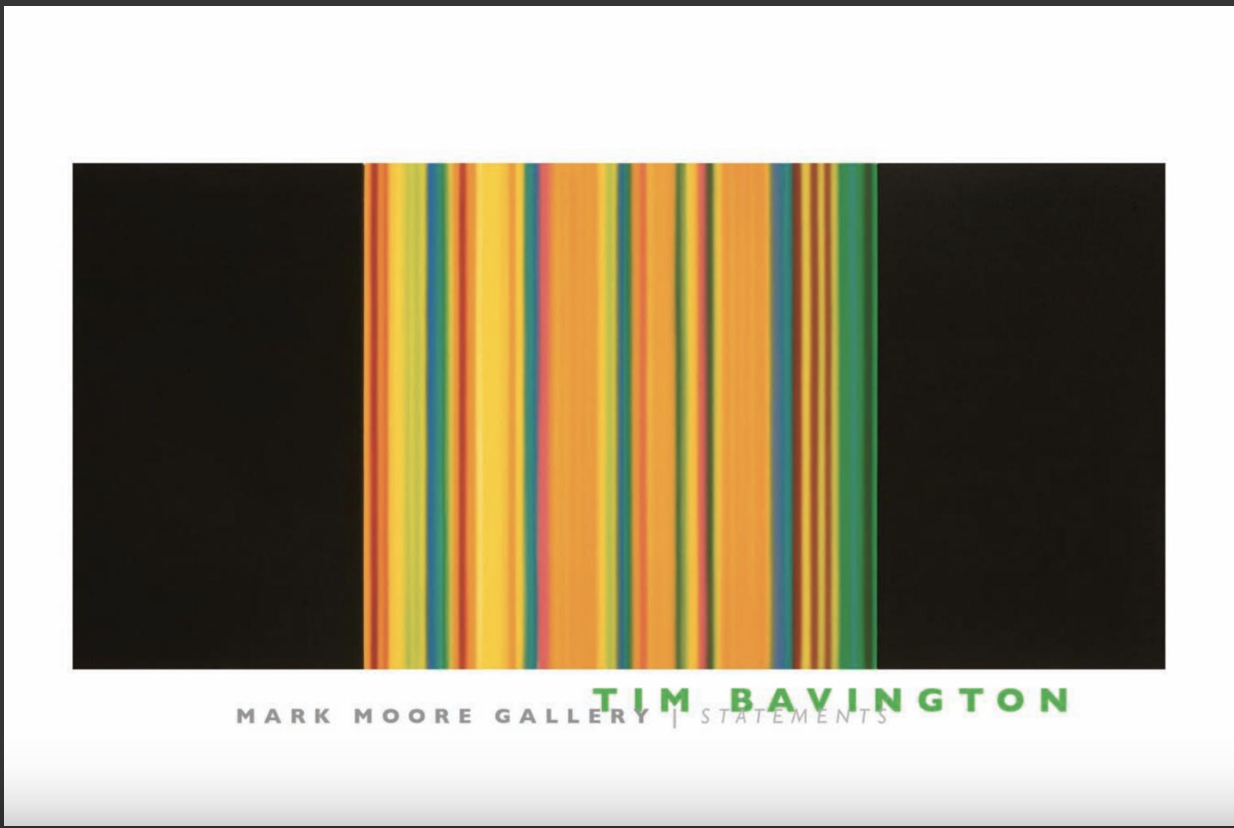
Artist catalogs available are: Penelope Umbrico; The Clayton Brothers; Cheryl Pope; David Klamen; Christopher Russell; Ben Weiner; Joshua Dildine; Kim Rugg; Feodor Voronov; Stephanie Washburn; John Azzarella; David Rathman; Vernon Fisher; Dimitri Kozyrev; Allison Schulnik; Ali Smith; Jeremy Fish; Kiel Johnson; Cindy Wright; Yigal Ozeri; Chad Person; Kim Dorland; and Tim Bavington.
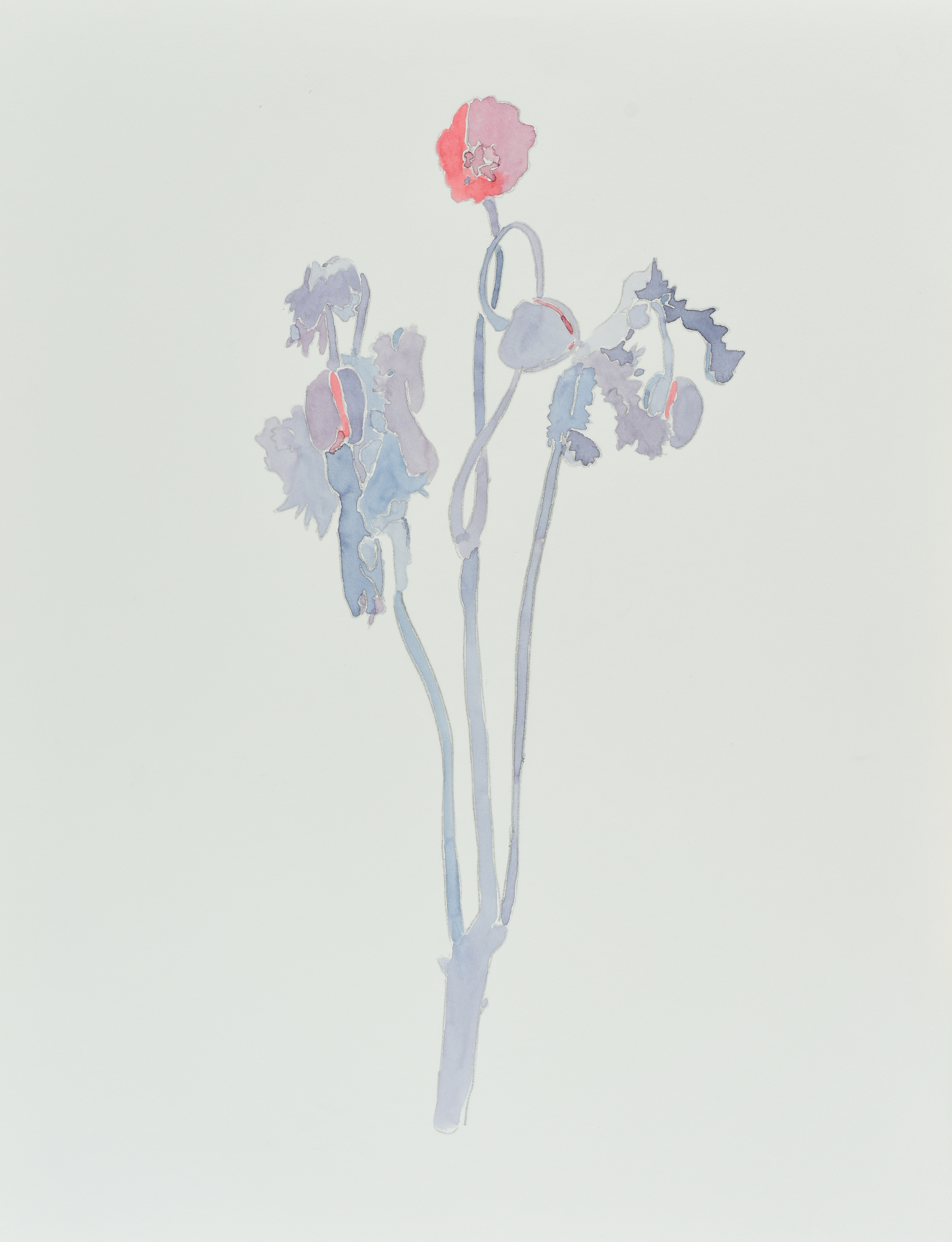
PREVIEWED: @MarkMooreGallery is pleased to present an exhibition of recent works on paper by artist JEFFRY MITCHELL – View this ARTSY ONLINE EXCLUSIVE SHOW at:
Jeffry Mitchell’s primary medium is ceramic and he is well versed in its traditions around the globe (references to Early American glazes, Pennsylvania Dutch pickle jars, asymmetrical Japanese aesthetic decisions and Chinese Foo Dogs abound). Mitchell takes a very direct approach to working, often eschewing refinements that commonly accompany many ceramic processes. The resulting pieces radiate an exuberant, unbridled immediacy. He feels that this unfettered approach is essentially relatable to our shared human experience. To explain this idea Mitchell talks about a fundamental familiarity with clay that we all carry with us from our formative years. Perhaps we came to it through playing as children making mud pies or maybe it was making pinch pots in elementary school, regardless he feels that clay is a material that is universally relatable at a very basic level. The imagery that he uses is also very accessible. Bears, elefants (he prefers ‘f’ to ‘ph’), bunnies and flowers appear over and over in his work and though they can be definitely be related to his own personal story he feels that these too spring from an early and universally familiar place. Throughout the work Mitchell seeks to tap into and broadcast a sense of vitality whether it be joyful or colored with more a complex mix of emotions. This throughline can been seen in the thick, dripping glazes, the unabashed appropriation of decorative motifs and an unmistakeable suffusion of playfulness.
Notable solo exhibitions of Mitchell’s work include: Like a Valentine: The Art of Jeffry Mitchell, 2012-2013, Henry Art Gallery; Some Things and Their Shadows, 2009, Kittredge Gallery, University of Puget Sound, Tacoma, WA; Shiny Happy Pretty (with Tina Hoggatt), 2008, Missoula Art Museum; Hanabuki, 2001, Henry Art Gallery; My Spirit, 1992, New Museum of Contemporary Art, NY; and Documents Northwest: The Poncho Series, 1990, Seattle Art Museum.
Mitchell’s work can be found in numerous private and public collections including the Smithsonian American Art Museum, Seattle Art Museum, Philadelphia Art Museum, Museum of Fine Arts, Boston, Philadelphia Art Museum, Fogg Art Museum (Harvard University), Honolulu Museum of Art, Tacoma Art Museum, and the Portland Art Museum.
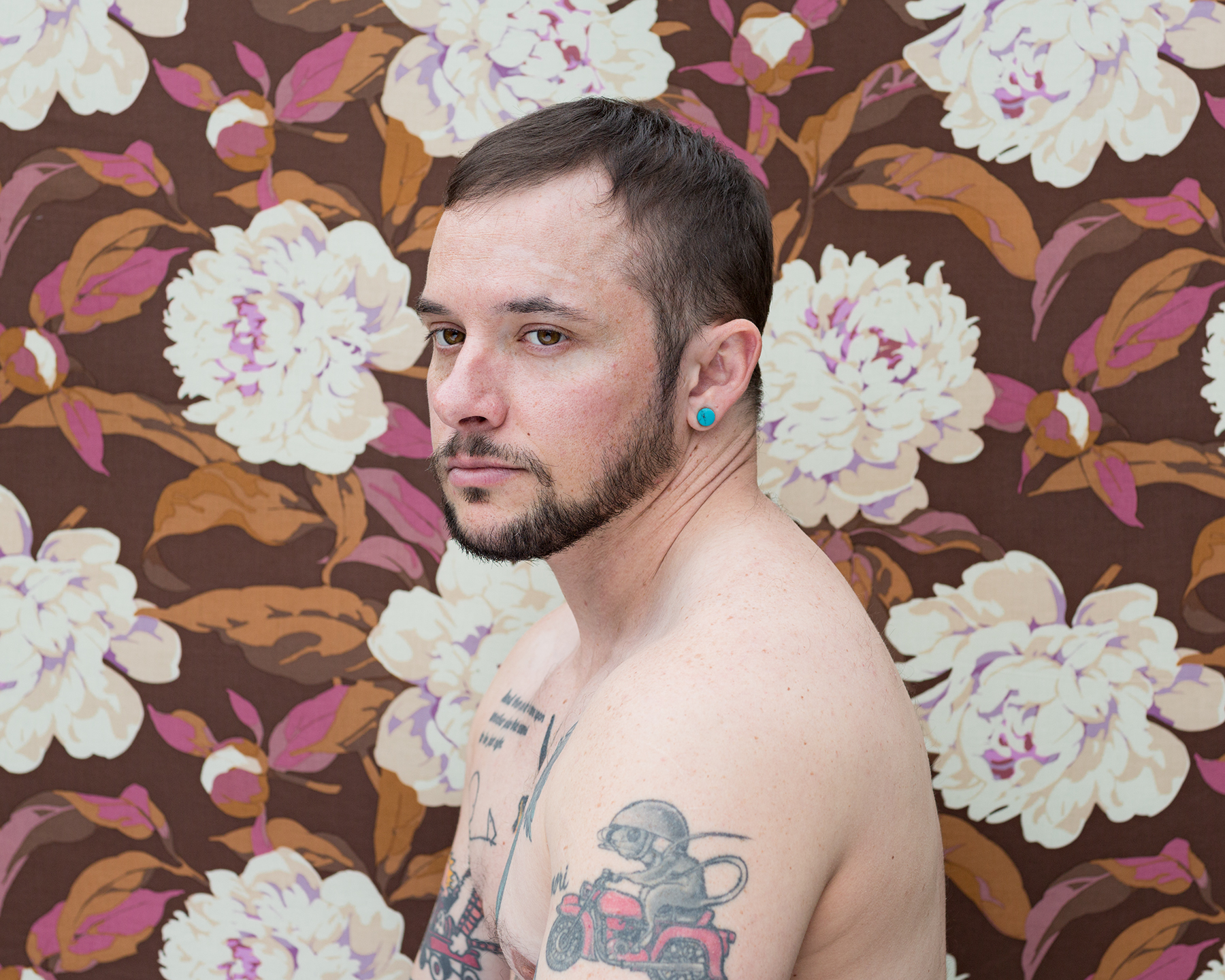
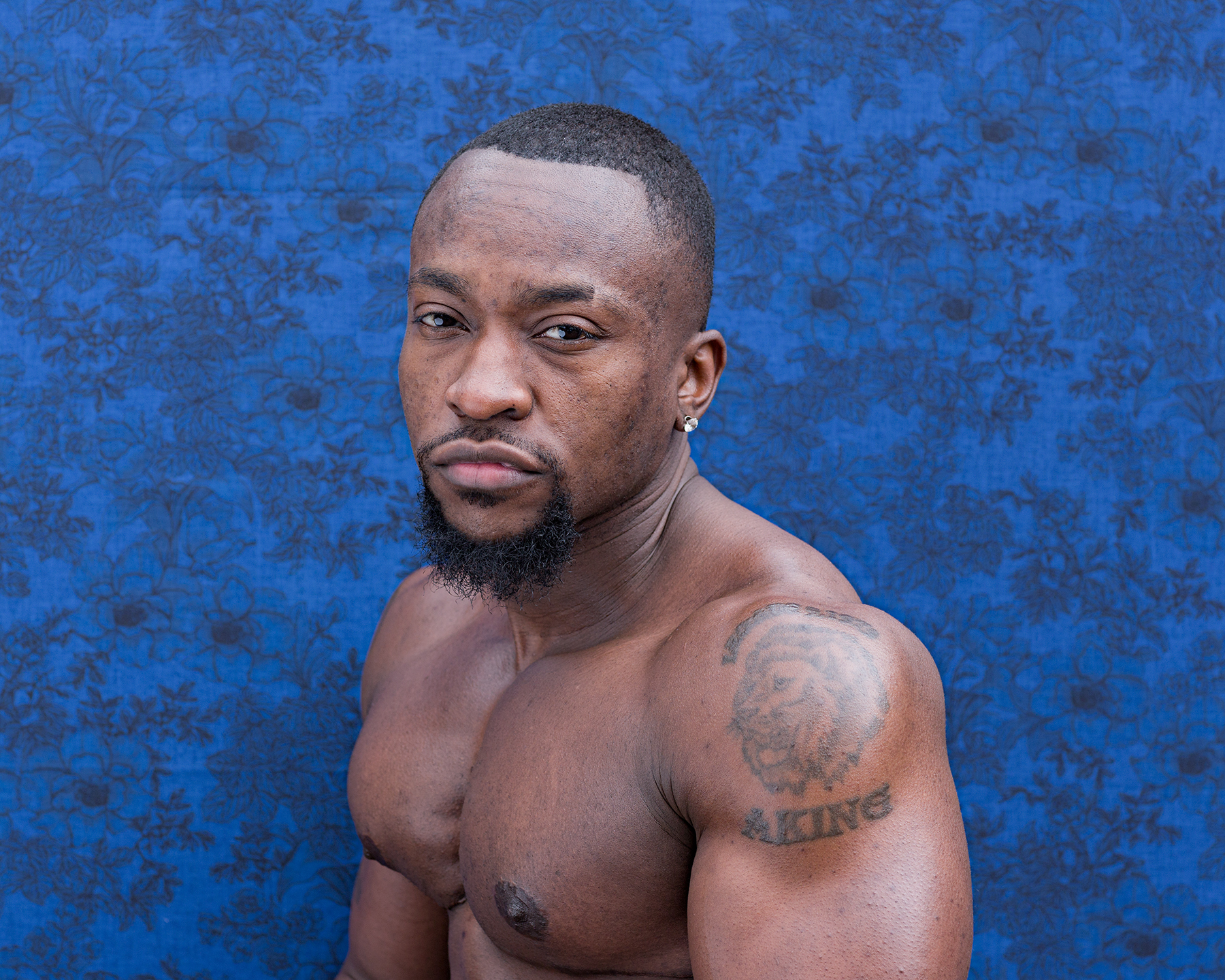
In a continuing exploration into the many nuances of gender identity and masculinity the new exhibition by artist Amy Elkins, titled Wallflower II, turns the camera to masculine identifying individuals from a spectrum of backgrounds. Much like Wallflower (shot between 2006-2008), the portraits stem from an ongoing intrigue regarding masculine identity when stripped of personal context – sitting bare within a constructed, impermanent environment. Unlike Wallflower, which aimed the lens at cisgender men almost entirely photographed in my personal space, Wallflower II explores a much broader sense of masculine identity- shot in the personal space of strangers in urban and rural Georgia upon first meeting and found through online calls surrounding ideas of masculinity and gender in the American South.
Amy Elkins (b. 1979 Venice, CA) is a visual artist based in the Bay Area. She received her BFA in Photography from the School of Visual Arts and her MFA in Art Practice from Stanford University. She has been exhibited and published both nationally and internationally, including at The High Museum of Art; South Bend Museum of Art; MSU Broad Museum; Kunsthalle Wien; the Minneapolis Institute of Arts; North Carolina Museum of Art and more. Her photographs have been published in American Photo, Conveyor, Dear Dave, EyeMazing, Financial Times, Harpers, Huffington Post, Los Angeles Times, Newsweek, NY Arts, New York Times, New Yorker, PDN, Real Simple, Stella and Vice among many others. Elkins is a recipient of The Lightwork Artist-in-Residence, the Villa Waldberta International Artist-in-Residence, the Aperture Prize, the Latitude Artist-in-Residence, and the Peter S. Reed Foundation Grant among others.
Elkins has spent the past fifteen+ years researching, creating, and exhibiting work that explores the multifaceted nature of masculine identity as well as the psychological and sociological impacts of incarceration. Her approach is series-based, steeped in research and oscillates between formal, conceptual and documentary with projects ranging from her earlier work, Wallflower (2004-2008), that looked into the nuances of gender identity, vulnerability and the female gaze to Elegant Violence (2010), which investigated aspects of male identity and athleticism through portraiture of young Ivy League rugby players moments after a game or Danseur (2012), that looked to young male ballet dancers moments after intensive training. Starting in 2016 Elkins returned to the Wallflower portrait for a body of work that is ongoing. The work aims to confront socially constructed ideas and standards surrounding gender, masculinity, vulnerability, and beauty in the American South.
Throughout the making of these formal portrait projects, Elkins has simultaneously worked on several award-winning bodies of work confronting social justice issues like mass incarceration and capital punishment in America. Her project Black is the Day, Black is the Night, exhibited through Mark Moore in 2018, spanned eight years and was made directly through correspondence with men serving life and death row sentences throughout the U.S. It has been exhibited at Aperture Gallery, Houston Center for Photography, the Wignall Museum of Contemporary Art, The High Museum among many others. Black is the Day, Black is the Night was published as Elkins’ first monograph in 2016. It won the 2017 Lucie Independent Book Award. It was Shortlisted for the 2017 Mack First Book Award and the 2016 Paris Photo-Aperture Foundation Photobook Prize as well as listed as one of the Best Photobooks of 2016 by TIME, Humble Arts Foundation, Photobook Store Magazine, and Photo-Eye among others.
Her second book Anxious Pleasures was released in July 2022 and is now available through Kris Graves Projects. Additional book publications include The Portrait. Photography as a Stage from Robert Mapplethorpe to Nan Goldin; The Sports Show: Athletics as Image and Spectacle; Photographs Not Taken; By the Glow of the Jukebox: The Americans List; Keeper of the Hearth; Next Generation: Contemporary American Photography; and The Photographer’s Playbook among others.
In a continuing exploration into the many nuances of gender identity and masculinity the new exhibition by artist Amy Elkins, titled Wallflower II, turns the camera to masculine identifying individuals from a spectrum of backgrounds. Much like Wallflower (shot between 2006-2008), the portraits stem from an ongoing intrigue regarding masculine identity when stripped of personal context – sitting bare within a constructed, impermanent environment. Unlike Wallflower, which aimed the lens at cisgender men almost entirely photographed in my personal space, Wallflower II explores a much broader sense of masculine identity- shot in the personal space of strangers in urban and rural Georgia upon first meeting and found through online calls surrounding ideas of masculinity and gender in the American South.
Amy Elkins (b. 1979 Venice, CA) is a visual artist based in the Bay Area. She received her BFA in Photography from the School of Visual Arts and her MFA in Art Practice from Stanford University. She has been exhibited and published both nationally and internationally, including at The High Museum of Art; South Bend Museum of Art; MSU Broad Museum; Kunsthalle Wien; the Minneapolis Institute of Arts; North Carolina Museum of Art and more. Her photographs have been published in American Photo, Conveyor, Dear Dave, EyeMazing, Financial Times, Harpers, Huffington Post, Los Angeles Times, Newsweek, NY Arts, New York Times, New Yorker, PDN, Real Simple, Stella and Vice among many others. Elkins is a recipient of The Lightwork Artist-in-Residence, the Villa Waldberta International Artist-in-Residence, the Aperture Prize, the Latitude Artist-in-Residence, and the Peter S. Reed Foundation Grant among others.
Elkins has spent the past fifteen+ years researching, creating, and exhibiting work that explores the multifaceted nature of masculine identity as well as the psychological and sociological impacts of incarceration. Her approach is series-based, steeped in research and oscillates between formal, conceptual and documentary with projects ranging from her earlier work, Wallflower (2004-2008), that looked into the nuances of gender identity, vulnerability and the female gaze to Elegant Violence (2010), which investigated aspects of male identity and athleticism through portraiture of young Ivy League rugby players moments after a game or Danseur (2012), that looked to young male ballet dancers moments after intensive training. Starting in 2016 Elkins returned to the Wallflower portrait for a body of work that is ongoing. The work aims to confront socially constructed ideas and standards surrounding gender, masculinity, vulnerability, and beauty in the American South.
Throughout the making of these formal portrait projects, Elkins has simultaneously worked on several award-winning bodies of work confronting social justice issues like mass incarceration and capital punishment in America. Her project Black is the Day, Black is the Night, exhibited through Mark Moore in 2018, spanned eight years and was made directly through correspondence with men serving life and death row sentences throughout the U.S. It has been exhibited at Aperture Gallery, Houston Center for Photography, the Wignall Museum of Contemporary Art, The High Museum among many others. Black is the Day, Black is the Night was published as Elkins’ first monograph in 2016. It won the 2017 Lucie Independent Book Award. It was Shortlisted for the 2017 Mack First Book Award and the 2016 Paris Photo-Aperture Foundation Photobook Prize as well as listed as one of the Best Photobooks of 2016 by TIME, Humble Arts Foundation, Photobook Store Magazine, and Photo-Eye among others.
Her second book Anxious Pleasures was released in July 2022 and is now available through Kris Graves Projects. Additional book publications include The Portrait. Photography as a Stage from Robert Mapplethorpe to Nan Goldin; The Sports Show: Athletics as Image and Spectacle; Photographs Not Taken; By the Glow of the Jukebox: The Americans List; Keeper of the Hearth; Next Generation: Contemporary American Photography; and The Photographer’s Playbook among others.
In a continuing exploration into the many nuances of gender identity and masculinity the new exhibition by artist Amy Elkins, titled Wallflower II, turns the camera to masculine identifying individuals from a spectrum of backgrounds. Much like Wallflower (shot between 2006-2008), the portraits stem from an ongoing intrigue regarding masculine identity when stripped of personal context – sitting bare within a constructed, impermanent environment. Unlike Wallflower, which aimed the lens at cisgender men almost entirely photographed in my personal space, Wallflower II explores a much broader sense of masculine identity- shot in the personal space of strangers in urban and rural Georgia upon first meeting and found through online calls surrounding ideas of masculinity and gender in the American South.
Amy Elkins (b. 1979 Venice, CA) is a visual artist based in the Bay Area. She received her BFA in Photography from the School of Visual Arts and her MFA in Art Practice from Stanford University. She has been exhibited and published both nationally and internationally, including at The High Museum of Art; South Bend Museum of Art; MSU Broad Museum; Kunsthalle Wien; the Minneapolis Institute of Arts; North Carolina Museum of Art and more. Her photographs have been published in American Photo, Conveyor, Dear Dave, EyeMazing, Financial Times, Harpers, Huffington Post, Los Angeles Times, Newsweek, NY Arts, New York Times, New Yorker, PDN, Real Simple, Stella and Vice among many others. Elkins is a recipient of The Lightwork Artist-in-Residence, the Villa Waldberta International Artist-in-Residence, the Aperture Prize, the Latitude Artist-in-Residence, and the Peter S. Reed Foundation Grant among others.
Elkins has spent the past fifteen+ years researching, creating, and exhibiting work that explores the multifaceted nature of masculine identity as well as the psychological and sociological impacts of incarceration. Her approach is series-based, steeped in research and oscillates between formal, conceptual and documentary with projects ranging from her earlier work, Wallflower (2004-2008), that looked into the nuances of gender identity, vulnerability and the female gaze to Elegant Violence (2010), which investigated aspects of male identity and athleticism through portraiture of young Ivy League rugby players moments after a game or Danseur (2012), that looked to young male ballet dancers moments after intensive training. Starting in 2016 Elkins returned to the Wallflower portrait for a body of work that is ongoing. The work aims to confront socially constructed ideas and standards surrounding gender, masculinity, vulnerability, and beauty in the American South.
Throughout the making of these formal portrait projects, Elkins has simultaneously worked on several award-winning bodies of work confronting social justice issues like mass incarceration and capital punishment in America. Her project Black is the Day, Black is the Night, exhibited through Mark Moore in 2018, spanned eight years and was made directly through correspondence with men serving life and death row sentences throughout the U.S. It has been exhibited at Aperture Gallery, Houston Center for Photography, the Wignall Museum of Contemporary Art, The High Museum among many others. Black is the Day, Black is the Night was published as Elkins’ first monograph in 2016. It won the 2017 Lucie Independent Book Award. It was Shortlisted for the 2017 Mack First Book Award and the 2016 Paris Photo-Aperture Foundation Photobook Prize as well as listed as one of the Best Photobooks of 2016 by TIME, Humble Arts Foundation, Photobook Store Magazine, and Photo-Eye among others.
Her second book Anxious Pleasures was released in July 2022 and is now available through Kris Graves Projects. Additional book publications include The Portrait. Photography as a Stage from Robert Mapplethorpe to Nan Goldin; The Sports Show: Athletics as Image and Spectacle; Photographs Not Taken; By the Glow of the Jukebox: The Americans List; Keeper of the Hearth; Next Generation: Contemporary American Photography; and The Photographer’s Playbook among others.
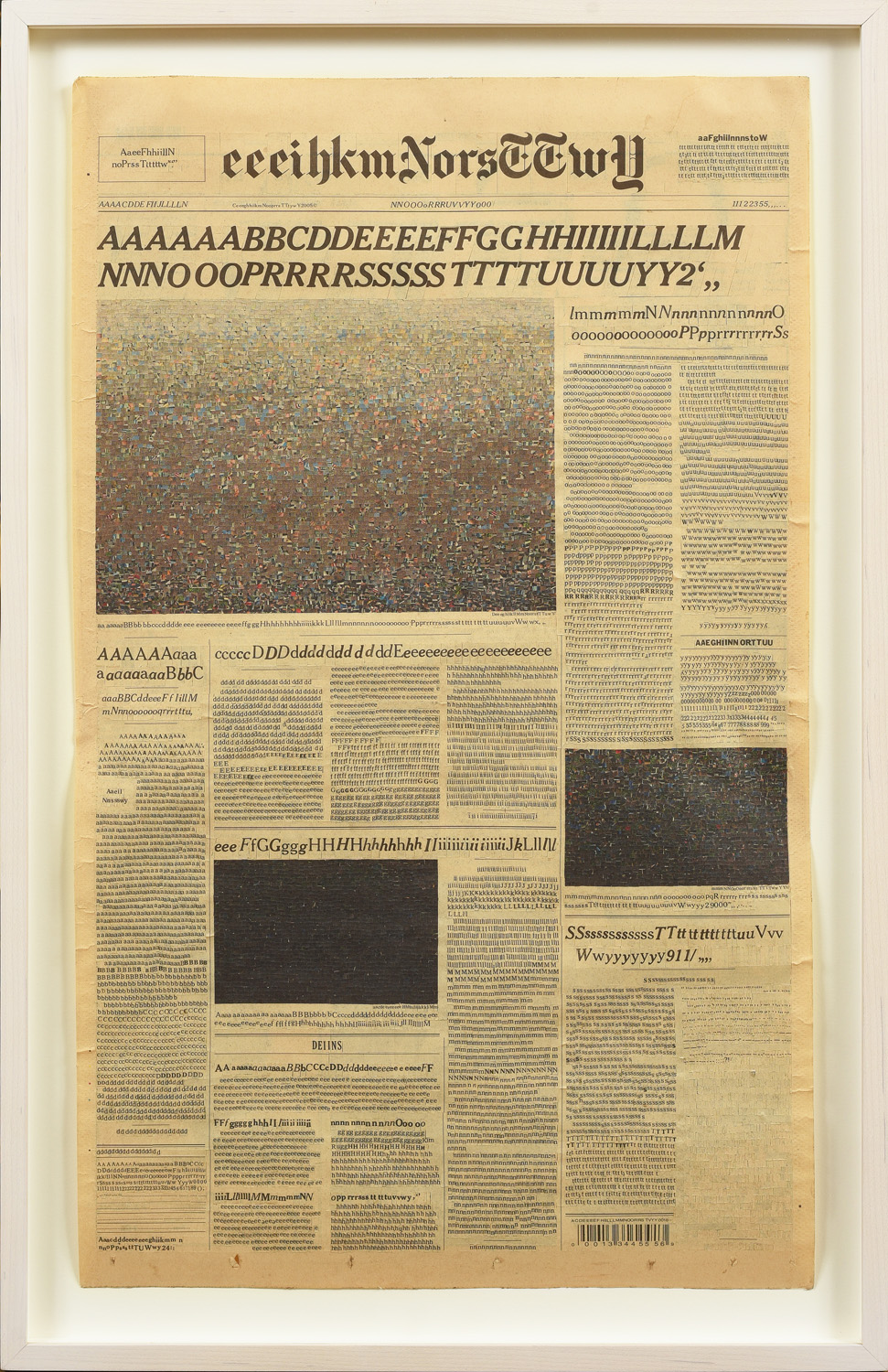
With surgical blades and a meticulous hand, Kim Rugg (b. 1963, Canada) dissects and reassembles newspapers, stamps, comic books, cereal boxes and postage stamps in order to render them conventionally illegible. The front page of the LA Times becomes neatly alphabetized jargon, debunking the illusion of its producers’ authority as much as the message itself. Through her re-appropriation of medium and meaning, she effectively highlights the innately slanted nature of the distribution of information as well as its messengers. Rugg has also created hand-drawn works alongside wallpaper installations, both of which toy with authenticity and falsehood through subtle trompe l’oeil. In her maps, Rugg re-envisions the topography of various states, countries, continents, and even the world without borders, featuring a staggeringly precise hand-drawn layout with only city names and regions as reference points. In own sense of abstracted cartography, Rugg redistributes traditional map colors (or eliminates them entirely) in order to nullify the social preeminence given to constructed territories, and highlight the idea that our attention is manipulated to focus on the powerful few instead of the physical many.
In a continuing exploration into the many nuances of gender identity and masculinity the new exhibition by artist Amy Elkins, titled Wallflower II, turns the camera to masculine identifying individuals from a spectrum of backgrounds. Much like Wallflower (shot between 2006-2008), the portraits stem from an ongoing intrigue regarding masculine identity when stripped of personal context – sitting bare within a constructed, impermanent environment. Unlike Wallflower, which aimed the lens at cisgender men almost entirely photographed in my personal space, Wallflower II explores a much broader sense of masculine identity- shot in the personal space of strangers in urban and rural Georgia upon first meeting and found through online calls surrounding ideas of masculinity and gender in the American South.
Amy Elkins (b. 1979 Venice, CA) is a visual artist based in the Bay Area. She received her BFA in Photography from the School of Visual Arts and her MFA in Art Practice from Stanford University. She has been exhibited and published both nationally and internationally, including at The High Museum of Art; South Bend Museum of Art; MSU Broad Museum; Kunsthalle Wien; the Minneapolis Institute of Arts; North Carolina Museum of Art and more. Her photographs have been published in American Photo, Conveyor, Dear Dave, EyeMazing, Financial Times, Harpers, Huffington Post, Los Angeles Times, Newsweek, NY Arts, New York Times, New Yorker, PDN, Real Simple, Stella and Vice among many others. Elkins is a recipient of The Lightwork Artist-in-Residence, the Villa Waldberta International Artist-in-Residence, the Aperture Prize, the Latitude Artist-in-Residence, and the Peter S. Reed Foundation Grant among others.
Elkins has spent the past fifteen+ years researching, creating, and exhibiting work that explores the multifaceted nature of masculine identity as well as the psychological and sociological impacts of incarceration. Her approach is series-based, steeped in research and oscillates between formal, conceptual and documentary with projects ranging from her earlier work, Wallflower (2004-2008), that looked into the nuances of gender identity, vulnerability and the female gaze to Elegant Violence (2010), which investigated aspects of male identity and athleticism through portraiture of young Ivy League rugby players moments after a game or Danseur (2012), that looked to young male ballet dancers moments after intensive training. Starting in 2016 Elkins returned to the Wallflower portrait for a body of work that is ongoing. The work aims to confront socially constructed ideas and standards surrounding gender, masculinity, vulnerability, and beauty in the American South.
Throughout the making of these formal portrait projects, Elkins has simultaneously worked on several award-winning bodies of work confronting social justice issues like mass incarceration and capital punishment in America. Her project Black is the Day, Black is the Night, exhibited through Mark Moore in 2018, spanned eight years and was made directly through correspondence with men serving life and death row sentences throughout the U.S. It has been exhibited at Aperture Gallery, Houston Center for Photography, the Wignall Museum of Contemporary Art, The High Museum among many others. Black is the Day, Black is the Night was published as Elkins’ first monograph in 2016. It won the 2017 Lucie Independent Book Award. It was Shortlisted for the 2017 Mack First Book Award and the 2016 Paris Photo-Aperture Foundation Photobook Prize as well as listed as one of the Best Photobooks of 2016 by TIME, Humble Arts Foundation, Photobook Store Magazine, and Photo-Eye among others.
Her second book Anxious Pleasures was released in July 2022 and is now available through Kris Graves Projects. Additional book publications include The Portrait. Photography as a Stage from Robert Mapplethorpe to Nan Goldin; The Sports Show: Athletics as Image and Spectacle; Photographs Not Taken; By the Glow of the Jukebox: The Americans List; Keeper of the Hearth; Next Generation: Contemporary American Photography; and The Photographer’s Playbook among others.




 Mark Moore Fine Art Blog