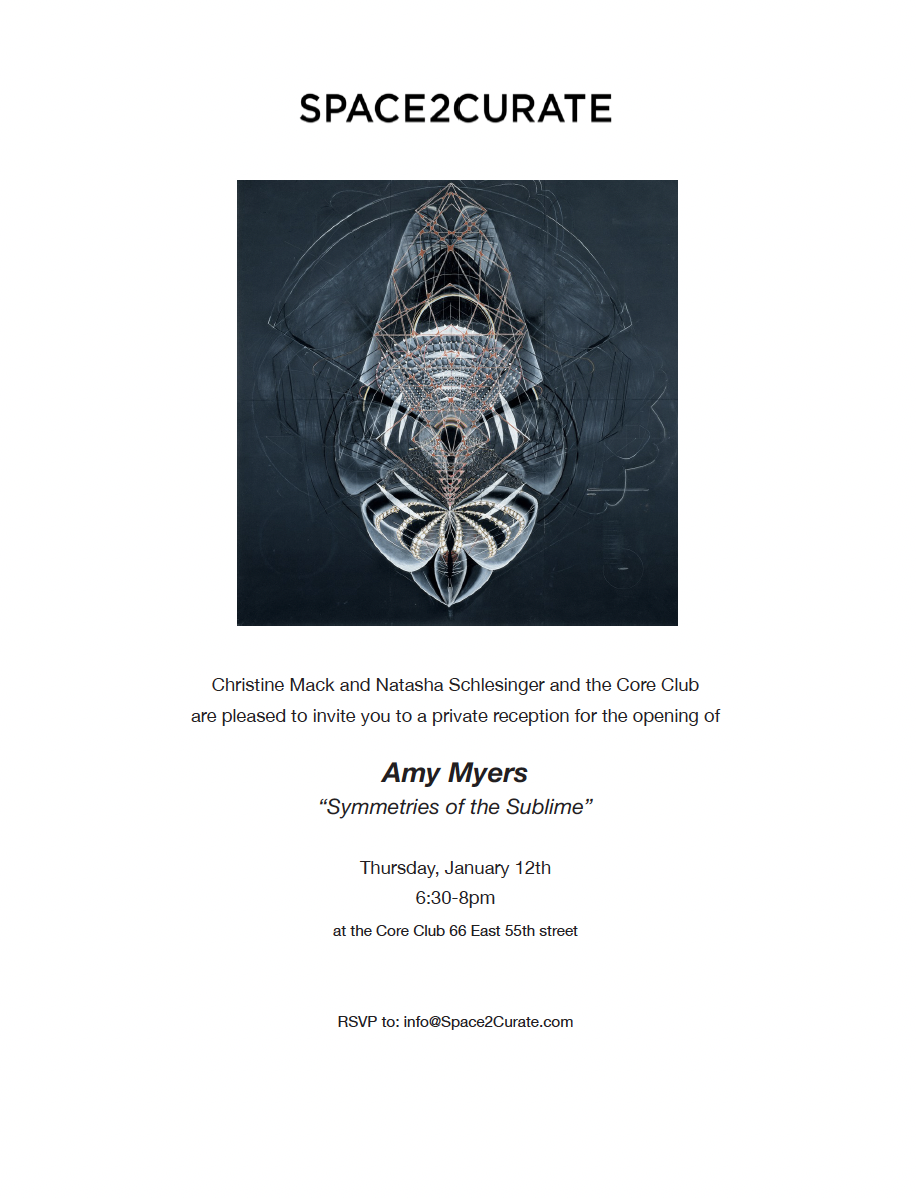
AMY MYERS Symmetries of the Sublime at Core Clubin NYC. Core Club is normally an exclusive members-only club, but you will have access to the show through the invitation I’ve included above. I hope you are able to join Amy Myers at the opening (list Thursday, January 12th, 6:30 – 8 PM) please RSVP using the email in the invitation above.
Concurrently, check out ARTSY Featured Show Of The Week: AMY MYERS “Ultraviolet Underground”
Amy Myers (b. 1965, Austin, TX) is a New York-based artist whose large-scale abstract drawings and paintings simultaneously reference particle physics, biology, philosophy, the human mind, and the mechanics of the universe.
Myers has artworks in the permanent collections of the Solomon R.Guggenheim Museum (New York, NY); Pérez Art Museum Miami (Miami, FL); California State University Art Museum (Long Beach, CA); Laguna Art Museum (Laguna Beach, CA); Museum of Fine Arts (Houston, TX); and the Nerman Museum of Contemporary Art (Overland Park, KS) – just to name a few.
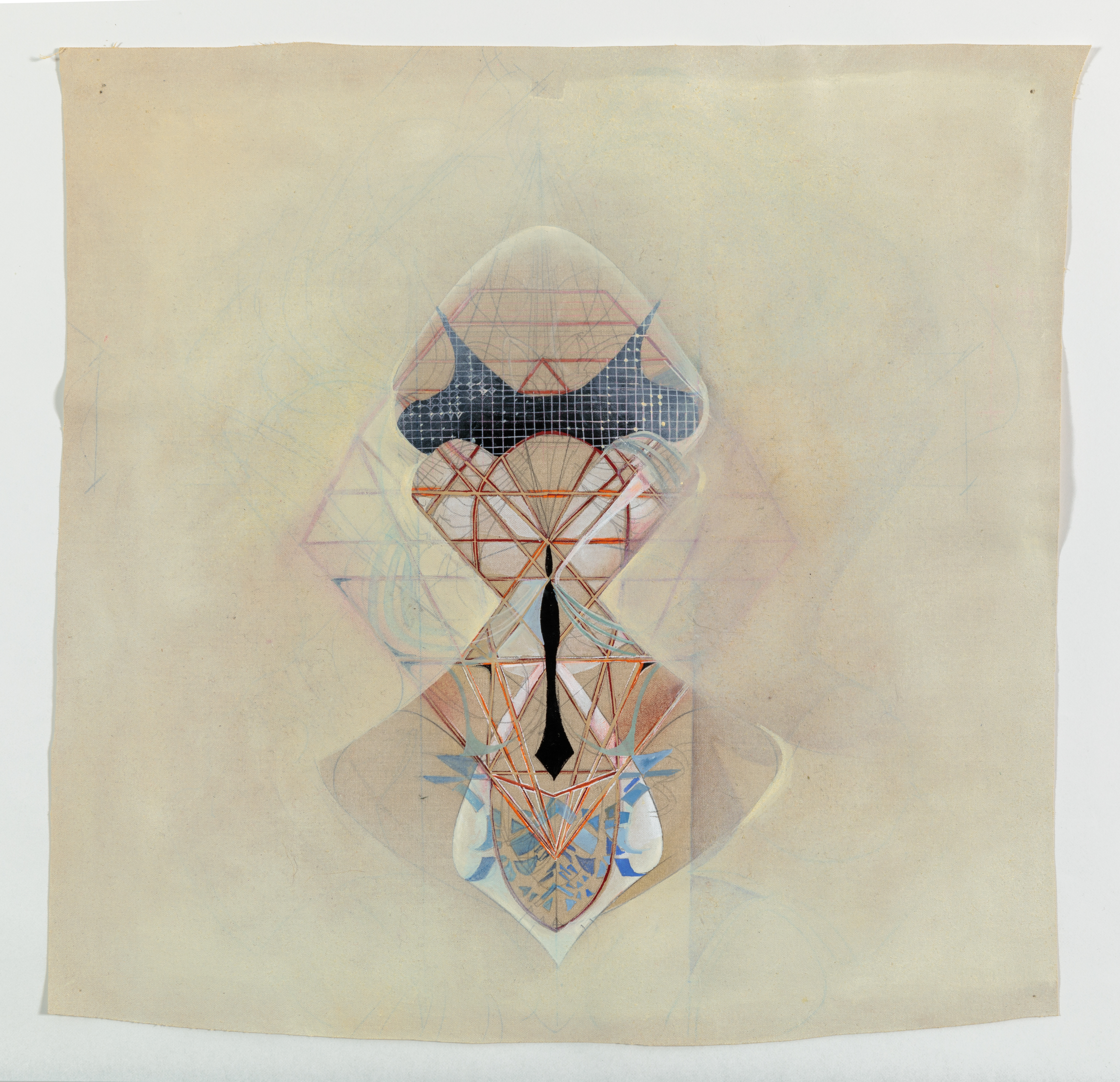
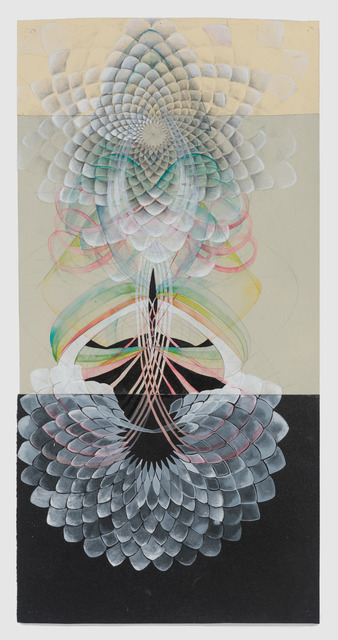
Amy Myers is best known for her large-scale charcoal and pastel drawings, which depict complicated worlds reminiscent of scientific patterns. Her father was a physicist, a fact often noted as an influence on the aesthetics and structure of her work.
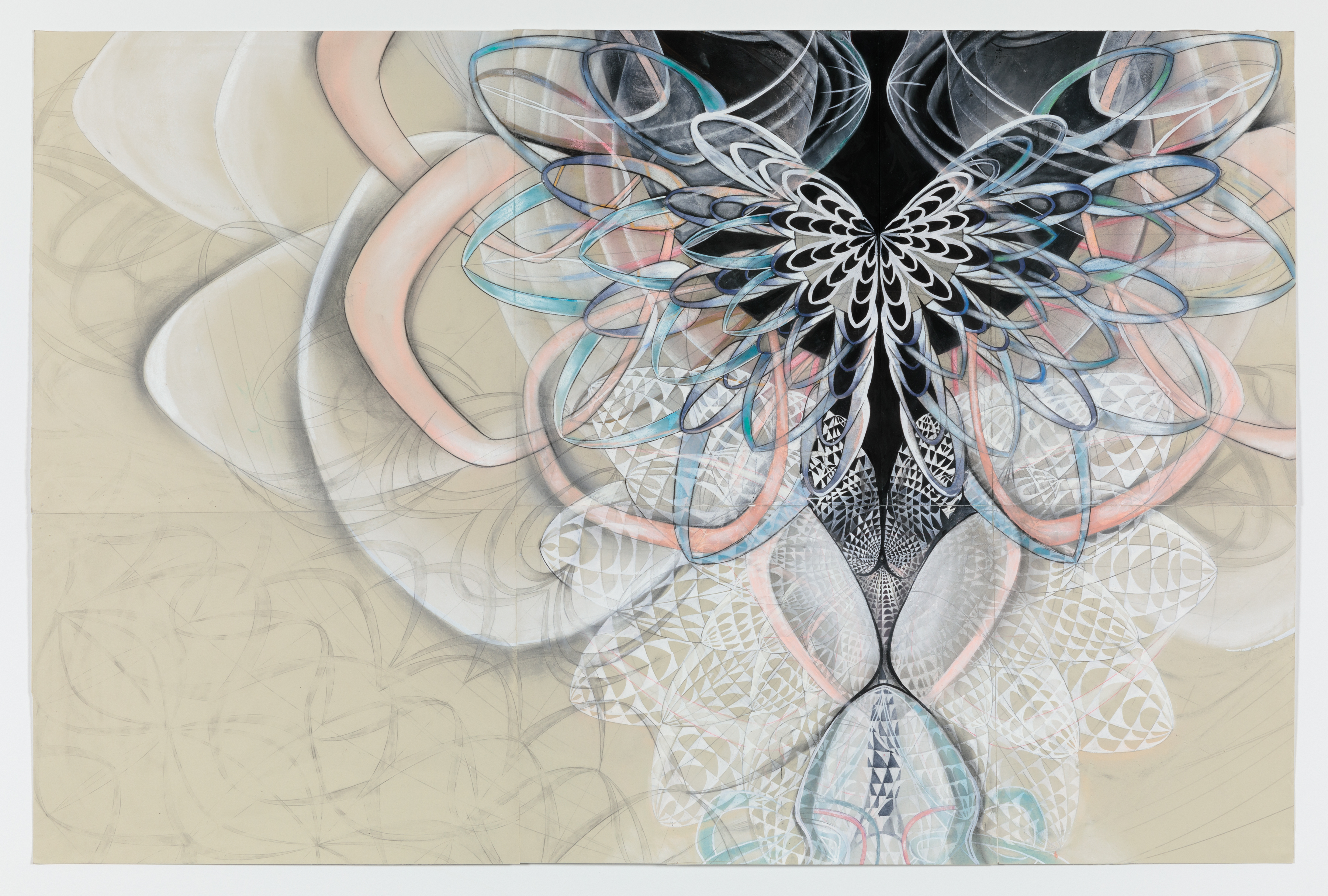
Myers’ compositions, always balanced but never exactly symmetrical, seamlessly integrate layers of matter radiating from a central, often labial core. Some elements are comprised of soft, biomorphic forms, at times fleshy and pulsating, at other times wispy and iridescent. Other structures appear as webs of severe, geometric forms slicing through the multi-layered composition, reminiscent of cyborgian hybrids, industrial machinery, and the bio-mechanical art of H. R. Giger. Many elements of Myers’ works are reminiscent of human organs, particularly the vulva, a symbol of creation that relates to the cyclical recreation and renewal inherent to the mechanics of the universe. Myers’ art has clear ties to Feminist art, with notable visual similarities to Georgia O’Keeffe’s paintings of flowers, buildings, and landscapes, and Judy Chicago’s series of vulvic plates for “The Dinner Party.”
ABOUT THE ARTIST:
Amy Myers (b. 1965, Austin, TX) is a New York-based artist whose large-scale abstract drawings and paintings simultaneously reference particle physics, biology, philosophy, the human mind, and the mechanics of the universe.
Myers has received numerous grants and fellowships, including The Pollock-Krasner Foundation Grant; Elizabeth Foundation for the Arts; Ellen S. Kaminsky Family Foundation Studio Residency and Award at MANA Contemporary; and The Marie Walsh Sharpe Art Foundation Studio Grant. Past residencies include Yaddo Artist Residency (Saratoga Springs, NY); Dora Maar House (Menerbes, France); and The American Academy in Rome.
Previous solo exhibitions include Mike Weiss Gallery (New York, NY); Mary Boone Gallery (New York, NY); Suzanne Vielmetter Los Angeles Projects (Los Angeles, CA); Danese Gallery (New York, NY); Rhona Hoffman Gallery (Chicago, IL); and Dunn and Brown Contemporary (Dallas, TX).
Past museum exhibitions include The Sweeney Art Museum at California State University (Riverside, CA); Pomona College, Montgomery Art Center (Claremont, CA); and University Art Museum, California State University (Long Beach, CA).
Myers has artworks in the permanent collections of the Solomon R.Guggenheim Museum (New York, NY); Pérez Art Museum Miami (Miami, FL); California State University Art Museum (Long Beach, CA); Fort Wayne Museum of Art (Fort Wayne, IN); Greenville County Museum of Art (Greenville, SC); Hudson Valley Center for Contemporary Art (Peekskill, NY); Laguna Art Museum (Laguna Beach, CA); Museum of Fine Arts (Houston, TX); Nerman Museum of Contemporary Art (Overland Park, KS); and the American Express Corporate Collection.
VERNON FISHER: PRINTS AND DRAWINGS – An Exclusive ARTSY Online Exhibition
On View Through January 22, 2023
Vernon Fisher is an American artist working in a wide range of media, best known for his skillful combinations and juxtapositions of image and language. In this exclusive ARTSY online exhibition we present seven important works from the artist’s personal collection available now.
“Anything that is resolved is either delusional or dishonest. We live far more arbitrary and capricious lives than we’re ready to admit. I think if we admitted it, we’d be scared all the time. Nothing in life is ever truly neat.” – Vernon Fisher
The mid-1970s was the period when Vernon Fisher started his artistic career, in the era marked by the legacies of Pop and Conceptual art. This mixture of styles created a unique fusion between painting and installation, in that way shaping new inspiring compositions derived from juxtapositions of language and imagery. Influenced by this period in contemporary art, but also by artists such as Ed Ruscha and John Baldessari, Fisher began creating his multilayered visual narratives. Resulting works – paintings, installations and collages – represent Vernon Fisher’s view on pop culture and contemporary society, enriched with art-historical and literary references. Often contextualized within a postmodernism, his works shares an influential practice of self-appraisal with Cy Twombly and Robert Rauschenberg.
Vernon Fisher was born in 1943 in Fort Worth, Texas. He studied English literature at the Hardin-Simmons University, where he received a BA in 1967. Vernon got his MFA in 1969, from the University of Illinois. As a true Fort Worth child, Fisher was raised and is still living in his hometown, where he enjoys appreciation as one of the Texas’s most internationally recognized artists.
The art of Vernon Fisher is included in the collections of more than 40 museums across the globe, such as the Hirshhorn Museum, Washington, D.C., Art Institute of Chicago, Modern Art Museum of Fort Worth, Phoenix Art Museum, Museum of Fine Arts, Houston, San Francisco Museum of Modern Art, Solomon R. Guggenheim Museum in New York and the Museum of Contemporary Art Chicago. The most important museum installation is in the collection of the famous Museum of Modern Art in New York.
Go to this link to access the Special ARTSY Viewing Room showcasing the seven important works just released from his studio: https://bit.ly/39WSofS
AMY MYERS Symmetries of the Sublime at Core Clubin NYC. Core Club is normally an exclusive members-only club, but you will have access to the show through the invitation I’ve included above. I hope you are able to join me at the opening (list Thursday, January 12th, 6:30 – 8 PM) please RSVP using the email in the invitation below. A huge thank you to The Core Club, Mark Moore Fine Art and Christine Mack and Natasha Schlesinger from SPACE2CURATE for your hard work putting this show together!
Concurrently, check out ARTSY Featured Show Of The Week: AMY MYERS “Ultraviolet Underground”
Amy Myers (b. 1965, Austin, TX) is a New York-based artist whose large-scale abstract drawings and paintings simultaneously reference particle physics, biology, philosophy, the human mind, and the mechanics of the universe.
Myers has artworks in the permanent collections of the Solomon R.Guggenheim Museum (New York, NY); Pérez Art Museum Miami (Miami, FL); California State University Art Museum (Long Beach, CA); Laguna Art Museum (Laguna Beach, CA); Museum of Fine Arts (Houston, TX); and the Nerman Museum of Contemporary Art (Overland Park, KS) – just to name a few.
Amy Myers is best known for her large-scale charcoal and pastel drawings, which depict complicated worlds reminiscent of scientific patterns. Her father was a physicist, a fact often noted as an influence on the aesthetics and structure of her work.
Myers’ compositions, always balanced but never exactly symmetrical, seamlessly integrate layers of matter radiating from a central, often labial core. Some elements are comprised of soft, biomorphic forms, at times fleshy and pulsating, at other times wispy and iridescent. Other structures appear as webs of severe, geometric forms slicing through the multi-layered composition, reminiscent of cyborgian hybrids, industrial machinery, and the bio-mechanical art of H. R. Giger. Many elements of Myers’ works are reminiscent of human organs, particularly the vulva, a symbol of creation that relates to the cyclical recreation and renewal inherent to the mechanics of the universe. Myers’ art has clear ties to Feminist art, with notable visual similarities to Georgia O’Keeffe’s paintings of flowers, buildings, and landscapes, and Judy Chicago’s series of vulvic plates for “The Dinner Party.”
ABOUT THE ARTIST:
Amy Myers (b. 1965, Austin, TX) is a New York-based artist whose large-scale abstract drawings and paintings simultaneously reference particle physics, biology, philosophy, the human mind, and the mechanics of the universe.
Myers has received numerous grants and fellowships, including The Pollock-Krasner Foundation Grant; Elizabeth Foundation for the Arts; Ellen S. Kaminsky Family Foundation Studio Residency and Award at MANA Contemporary; and The Marie Walsh Sharpe Art Foundation Studio Grant. Past residencies include Yaddo Artist Residency (Saratoga Springs, NY); Dora Maar House (Menerbes, France); and The American Academy in Rome.
Previous solo exhibitions include Mike Weiss Gallery (New York, NY); Mary Boone Gallery (New York, NY); Suzanne Vielmetter Los Angeles Projects (Los Angeles, CA); Danese Gallery (New York, NY); Rhona Hoffman Gallery (Chicago, IL); and Dunn and Brown Contemporary (Dallas, TX).
Past museum exhibitions include The Sweeney Art Museum at California State University (Riverside, CA); Pomona College, Montgomery Art Center (Claremont, CA); and University Art Museum, California State University (Long Beach, CA).
Myers has artworks in the permanent collections of the Solomon R.Guggenheim Museum (New York, NY); Pérez Art Museum Miami (Miami, FL); California State University Art Museum (Long Beach, CA); Fort Wayne Museum of Art (Fort Wayne, IN); Greenville County Museum of Art (Greenville, SC); Hudson Valley Center for Contemporary Art (Peekskill, NY); Laguna Art Museum (Laguna Beach, CA); Museum of Fine Arts (Houston, TX); Nerman Museum of Contemporary Art (Overland Park, KS); and the American Express Corporate Collection.
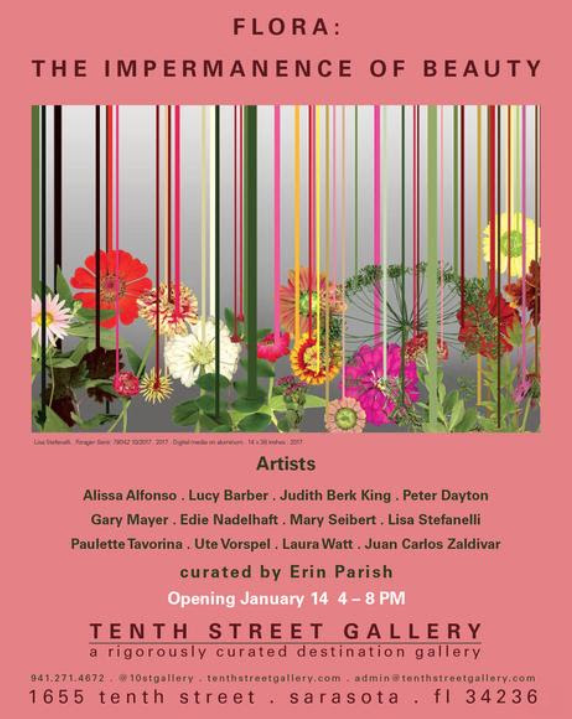
Lisa Stefanelli is an artist living and working in New York City and Easton, Pennsylvania. She attended the Rhode Island School of Design and received her degree in 1989. She has been a practicing artist for the last three decades.
“The underlying pursuit of my studio practice is to examine the possibility of being simultaneously involved and uninvolved in the complexity of all of our relationships, both animate and inanimate. Elements of the environments we inhabit—signage, sound/music, advertising, and popular culture (basically the cultural clutter of our lives)—are primary in informing the paths and trajectories of the works’ visual language. The work is elaborate and complicated while concurrently yearning to avoid the entanglements it embodies. And yet there is a joy in the confusion we live in. My practice chases that joy.”
-Lisa Stefanelli (2019)
Most recent solo exhibitions include Robischon Gallery, Denver, Colorado, Pentimenti Gallery, Philadelphia, Penn, Pierogi Gallery, NYC, Robischon Gallery, and Mark Moore Gallery, Los Angeles, California.
She has work in the collections of the United States Department of State, Washington DC, The West Collection, Oaks, PA, The Rose Art Museum, Brandeis University, MA, The Mondstudio Collection at the Kunstmuseum, Berne, Switzerland, The Albright Knox Gallery, Buffalo, NY and The Wynn Collection, Las Vegas, NV.
A short video on this artist and her practice in her studio can be viewed at: http://bit.ly/2pNd9Da
A free online catalog of Stefanelli’s works from 2000-2016 can be downloaded at the following link:
Amy Myers is best known for her large-scale charcoal and pastel drawings, which depict complicated worlds reminiscent of scientific patterns. Her father was a physicist, a fact often noted as an influence on the aesthetics and structure of her work.
Myers’ compositions, always balanced but never exactly symmetrical, seamlessly integrate layers of matter radiating from a central, often labial core. Some elements are comprised of soft, biomorphic forms, at times fleshy and pulsating, at other times wispy and iridescent. Other structures appear as webs of severe, geometric forms slicing through the multi-layered composition, reminiscent of cyborgian hybrids, industrial machinery, and the bio-mechanical art of H. R. Giger. Many elements of Myers’ works are reminiscent of human organs, particularly the vulva, a symbol of creation that relates to the cyclical recreation and renewal inherent to the mechanics of the universe. Myers’ art has clear ties to Feminist art, with notable visual similarities to Georgia O’Keeffe’s paintings of flowers, buildings, and landscapes, and Judy Chicago’s series of vulvic plates for “The Dinner Party.”
ABOUT THE ARTIST:
Amy Myers (b. 1965, Austin, TX) is a New York-based artist whose large-scale abstract drawings and paintings simultaneously reference particle physics, biology, philosophy, the human mind, and the mechanics of the universe.
Myers has received numerous grants and fellowships, including The Pollock-Krasner Foundation Grant; Elizabeth Foundation for the Arts; Ellen S. Kaminsky Family Foundation Studio Residency and Award at MANA Contemporary; and The Marie Walsh Sharpe Art Foundation Studio Grant. Past residencies include Yaddo Artist Residency (Saratoga Springs, NY); Dora Maar House (Menerbes, France); and The American Academy in Rome.
Previous solo exhibitions include Mike Weiss Gallery (New York, NY); Mary Boone Gallery (New York, NY); Suzanne Vielmetter Los Angeles Projects (Los Angeles, CA); Danese Gallery (New York, NY); Rhona Hoffman Gallery (Chicago, IL); and Dunn and Brown Contemporary (Dallas, TX).
Past museum exhibitions include The Sweeney Art Museum at California State University (Riverside, CA); Pomona College, Montgomery Art Center (Claremont, CA); and University Art Museum, California State University (Long Beach, CA).
Myers has artworks in the permanent collections of the Solomon R.Guggenheim Museum (New York, NY); Pérez Art Museum Miami (Miami, FL); California State University Art Museum (Long Beach, CA); Fort Wayne Museum of Art (Fort Wayne, IN); Greenville County Museum of Art (Greenville, SC); Hudson Valley Center for Contemporary Art (Peekskill, NY); Laguna Art Museum (Laguna Beach, CA); Museum of Fine Arts (Houston, TX); Nerman Museum of Contemporary Art (Overland Park, KS); and the American Express Corporate Collection.
Amy Myers is best known for her large-scale charcoal and pastel drawings, which depict complicated worlds reminiscent of scientific patterns. Her father was a physicist, a fact often noted as an influence on the aesthetics and structure of her work.
Myers’ compositions, always balanced but never exactly symmetrical, seamlessly integrate layers of matter radiating from a central, often labial core. Some elements are comprised of soft, biomorphic forms, at times fleshy and pulsating, at other times wispy and iridescent. Other structures appear as webs of severe, geometric forms slicing through the multi-layered composition, reminiscent of cyborgian hybrids, industrial machinery, and the bio-mechanical art of H. R. Giger. Many elements of Myers’ works are reminiscent of human organs, particularly the vulva, a symbol of creation that relates to the cyclical recreation and renewal inherent to the mechanics of the universe. Myers’ art has clear ties to Feminist art, with notable visual similarities to Georgia O’Keeffe’s paintings of flowers, buildings, and landscapes, and Judy Chicago’s series of vulvic plates for “The Dinner Party.”
ABOUT THE ARTIST:
Amy Myers (b. 1965, Austin, TX) is a New York-based artist whose large-scale abstract drawings and paintings simultaneously reference particle physics, biology, philosophy, the human mind, and the mechanics of the universe.
Myers has received numerous grants and fellowships, including The Pollock-Krasner Foundation Grant; Elizabeth Foundation for the Arts; Ellen S. Kaminsky Family Foundation Studio Residency and Award at MANA Contemporary; and The Marie Walsh Sharpe Art Foundation Studio Grant. Past residencies include Yaddo Artist Residency (Saratoga Springs, NY); Dora Maar House (Menerbes, France); and The American Academy in Rome.
Previous solo exhibitions include Mike Weiss Gallery (New York, NY); Mary Boone Gallery (New York, NY); Suzanne Vielmetter Los Angeles Projects (Los Angeles, CA); Danese Gallery (New York, NY); Rhona Hoffman Gallery (Chicago, IL); and Dunn and Brown Contemporary (Dallas, TX).
Past museum exhibitions include The Sweeney Art Museum at California State University (Riverside, CA); Pomona College, Montgomery Art Center (Claremont, CA); and University Art Museum, California State University (Long Beach, CA).
Myers has artworks in the permanent collections of the Solomon R.Guggenheim Museum (New York, NY); Pérez Art Museum Miami (Miami, FL); California State University Art Museum (Long Beach, CA); Fort Wayne Museum of Art (Fort Wayne, IN); Greenville County Museum of Art (Greenville, SC); Hudson Valley Center for Contemporary Art (Peekskill, NY); Laguna Art Museum (Laguna Beach, CA); Museum of Fine Arts (Houston, TX); Nerman Museum of Contemporary Art (Overland Park, KS); and the American Express Corporate Collection.
Dirk Staschke is best known for his exploration of Dutch Vanitas still life themes in the medium of ceramics. His current body of work explores the space in between sculpture and painting. His work often uses meticulous representation as foil for examining skill and craft.
As he recently stated:
Occasionally, Art allows for the manipulation of materials into something greater than the sum of its parts. I look to the still life as a window into the transcendent, an attempt to conjure the metaphysical from the mundane. This transformation through processes is analogous to a search for some deeper meaning or truth.
Dutch still life paintings, sometimes called Vanitas, are concerned with the futility of pleasure and the certainty of death. Religious in nature, the paintings also confer the belief that this world is somehow less real than the one that awaits. It is this modulation between the real and illusionistic that most interests me and ultimately makes my work about our perceptions.
I endeavor to explore the space in between sculpture and painting that neither medium can occupy alone. Look behind a painting and the illusion of space is lost. My work seeks to give that space a tangible form. Like a movie set, the knowable gives way to a backdrop of structures that exist in support and in reaction to its creation. Representation becomes a departure point and a foil for examining skill and craft.
My work is viewpoint dependent, at times making complete sense to the viewer as an organized painting yet completely discordant from other angles. Notions of front and back become subjective. The act of how something was formed imbues meaning. The relation of what is fully formed to what is left unfinished expresses that meaning. It contrasts perceptions of taste, ability, and worth.
He received his BFA from the University of Montevallo followed by an MFA from Alfred University and has maintained an ongoing studio practice and extensive exhibition record for the last twenty years. During this time, he has taught at many notable universities, including Alfred University and New York University. His work has been shown internationally and resides in the permanent collections of several museums including the Smithsonian Museum in Washington (DC), Icheon Museum, World Ceramic Center (Gwango-dong) South Korea, Portland Art Museum (OR). He has received various artist’s grants including grants from The Virginia Groot Foundation and the Canada Council on the Arts.




 Mark Moore Fine Art Blog